
By Peter McCullough
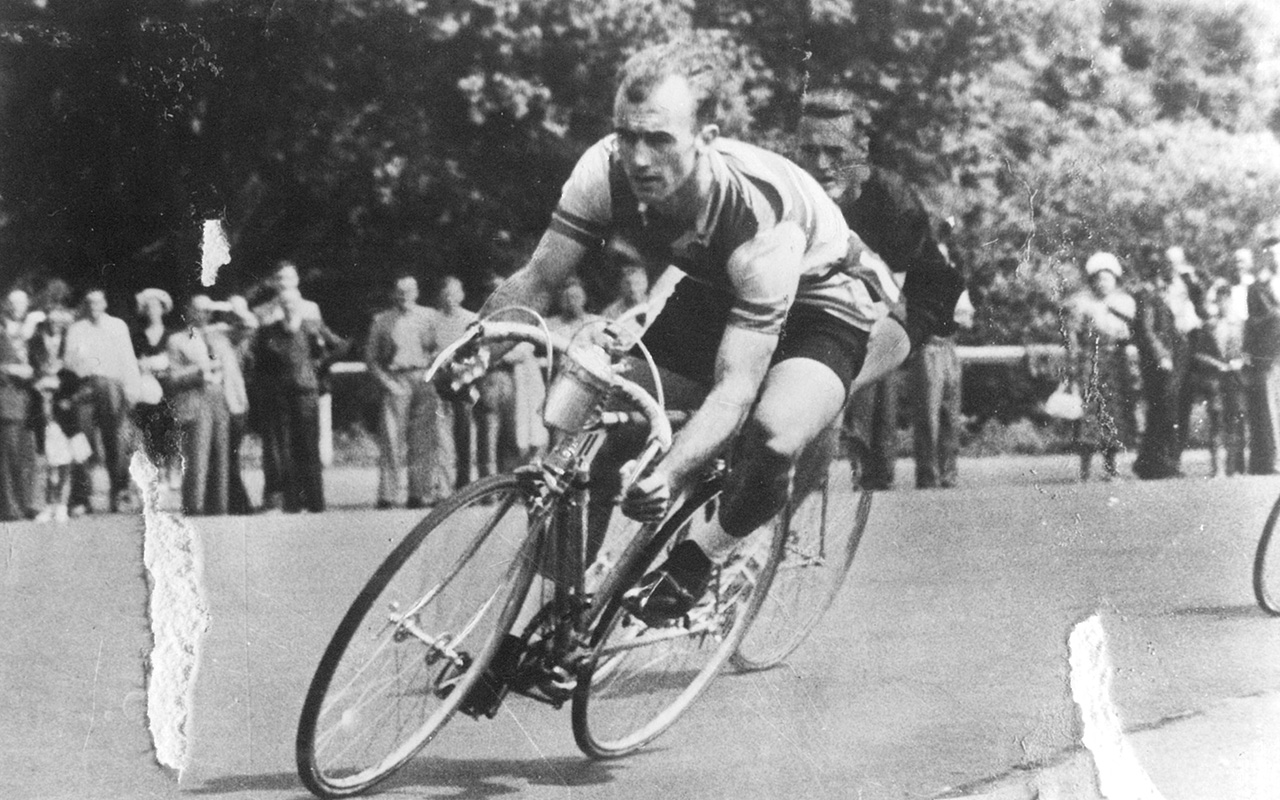
Hec Sutherland, born in Footscray, lived on the Mornington Peninsula for over 50 years prior to his death in 2011. Although one of the best cyclists that Australia has produced, he was a man of many talents. Hec was interviewed several years before he passed away; this is his story.
Hec, tell us about your family
I was born in Footscray on 6th March,1930. The Sutherlands were a Footscray family; my father (Alan) and my mother (Alice, nee Thornburn) were Footscray people. My father was a machinist at the Ordnance Factory in Gordon Street. I was the eldest in a family of three, having a brother (Don) and a sister, Margaret. Don was also a pretty good bike rider but moved to WA and did most of his riding over there. Of course gowing up in Footscray meant barracking for the Bulldogs was compulsory.
What was Footscray like in those days?
It was pretty good, almost like being in a country area. Of course there wasn’t the amount of traffic around; it was probably much the same as Hastings in those days.
What about schooling?
I went to the Geelong Road State School. After that there was Footscray Tech. but I wasn’t smart enough. I didn’t want to go there. Instead I ran away to be a jockey and never went to secondary school.
Tell us about the horses
Well Mum and Dad never got on that well and I used to get up early in the morning at 4 o’clock, get on my bike, and go down to the Flemington track. I always loved the horses and a few of Dad’s relations were trainers.They were George Sutherland (Sydney), Jim Sutherland (Perth), and Bill Sutherland (Western Australia) and I used to listen to them at family get-togethers at home.
It would have been 1943 when I decided to run away and they found me three weeks later at the stables. One of the reasons I went back home was that one of the stable hands who was much bigger than us loved to belt the little apprentices. I was one of the ones he belted and I said to him, “I’ll catch up with you one day.” So I went home. That was one of the reasons but I was also worried about my brother and sister as well.
One morning not long after I ran away this trainer came up and said “You’re here every morning. Can I help you?” I told him I was thinking about being a jockey; I was only a little tacker weighing just over 6 stone. He said “OK. Well come with me.” That was Theo Lewis who at the time was one of the top trainers. I went with him for a while but it didn’t lead anywhere as the senior jockeys such as Bill Williamson did all the track work. All I was doing was cleaning out the stables.
Eventually I left Theo Lewis and went to Claude Goodfellow where Ron Hutchison was the apprentice jockey. I got too heavy and had to give away the idea of being a jockey. However I never lost my love of horses and took up training when I came to Balnarring.
What about your experience as a boxer, Hec?
Because I was so weedy my father thought I should build myself up and be able to take care of myself and sent me to Jack McLeod’s gym.This put an end to my ambition to be a jockey but it built up my strength and stamina when I took up bike riding.
Although I never fought in the ring, I went to the gym three nights a week for 7 or 8 years and did all the sparring. The same night I started at Jack McLeod’s, Frankie Flannery started as well. What a wonderful boxer Frankie turned out to be. Pound for pound and inch for inch he was probably one of the hardest boxers who ever fought.Years later I bumped into Eddie Miller who was a champion boxer and I mentioned that I knew Frankie pretty well. Eddie just shook his head and said, “You couldn’t hurt that little bugger.”
Frankie Flannery picked up quite a few titles, initially as a bantamweight, and then he was down to fight Jack Hassen for the Ausralian Lightweight Championship. Bobbie Flannery, Frank’s brother, was always at the gym and we often baited Frankie that he didn’t do enough.When the title fight was announced old Blinker McLeod said, “Well, Frank, you’ll have to put in a lot more to beat Hassen.” Frank looked at Bob and me and said, “You two have been baiting me. What about helping.” I said, “Help you! You don’t need help, mate. Hassen needs the help.” However Bobbie and I were the only two who did all the exercises and sparring with him leading up to his fight with Hassen. I was about the same height as Hassen who was about 6 inches taller than Flannery. It was probably one of the hardest of fights; there were 6 or 7 knockdowns but Frankie finally won.
Because of my association with many of the top boxers I have been invited to numerous functions over the years for past and present boxers.
Before we get onto cycling, remember me telling you about the stable hand who used to belt me, and telling him I would catch up with him? After a few years at the gym I could handle myself pretty well. This day I went to the stables to see a few of the blokes I knew and the bully was still there. He went into one of the empty boxes, so I followed him and closed the door. When he turned round I said to him, “Remember how you used to belt all the apprentices and you belted me? Well now it’s your turn.” I knocked him out and sat him in a water bucket which was a 44 gallon drum cut down to about a foot high. Just then Theo Lewis walked in and said, “Good Heavens! What has happened to Ray?” I explained what had happened and he just laughed and said, “Well fair enough. It might stop him.” I don’t think Ray belted any more apprentices after that.
It has taken a while to get to cycling but perhaps you could tell us how you got started, Hec.
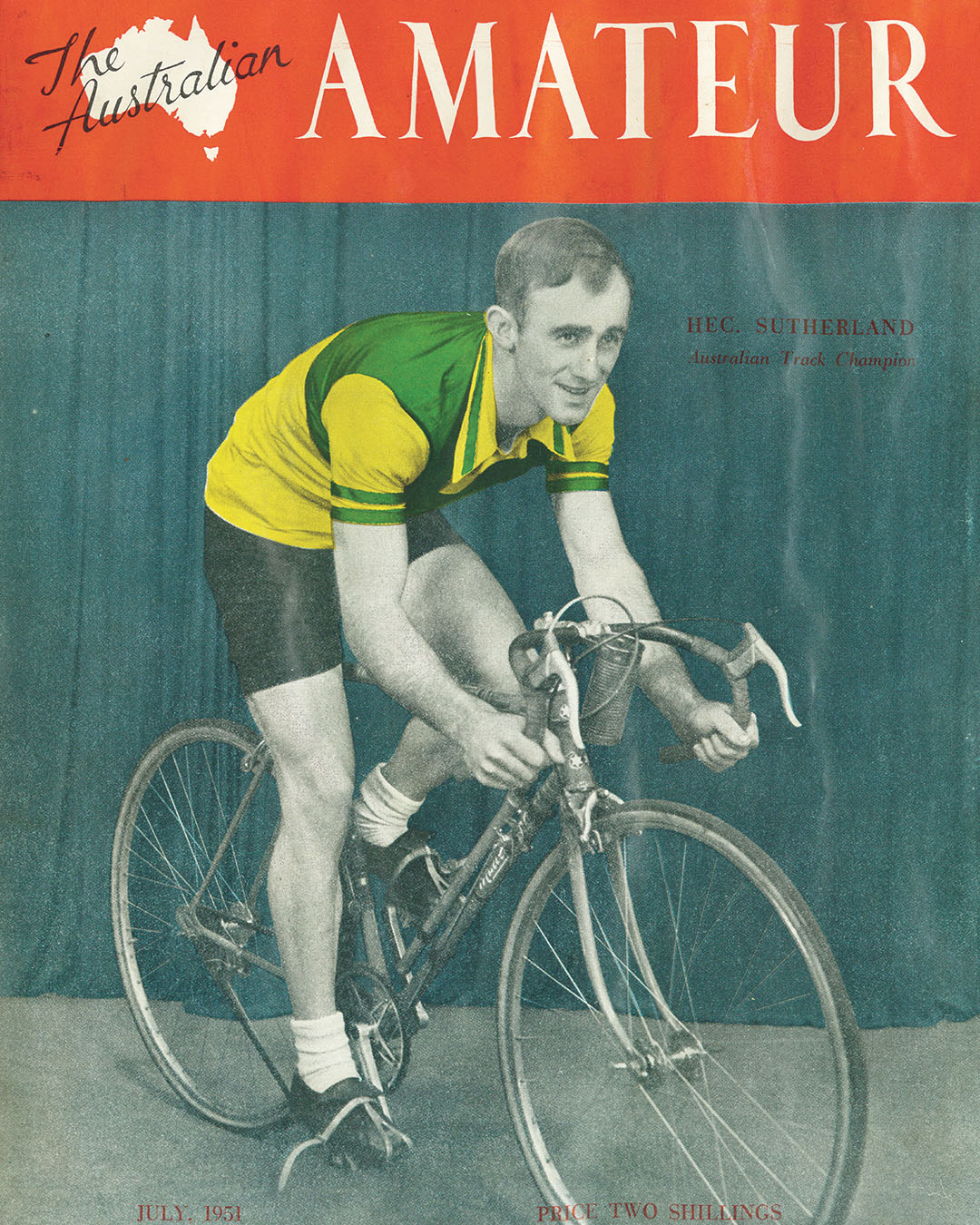
When I was 14 I was delivering papers around Footscray on an old bike belonging to Dad. It weighed a ton and was called “The Iron Horse”.My mate up the road had decided to join the Footscray Cycling Club and I thought I would go along as well. However Dad said, “Don’t you worry about joining, son, we haven’t got the money to buy you a bloody bike.” I said I was only going along to watch. Over the next 4 or 5 months I was given bits and pieces by other bike riders and slowly put an old bike together. I had to ask Mum and Dad for the money to join the bike club – it wasn’t much – and started riding. It was something that I found easier than anything else I had tried. A few of the older blokes took an interest in me and said that I would be OK once I grew a bit. One named Jack Molloy was particularly helpful and arranged for me to get my first road bike. Well I did grow over the next year and improved to the extent that I was selected in the Victorian amateur team for the Australian junior track titles in Hobart. I was placed in every title.
All this time I was still working out at the gym. However when I was about 16 Dad said, “You should build yourself up a bit more. Go up and swing the hammer for old Toby, the blacksmith, up at the corner.” So I went up every Friday afternoon and Saturday morning when they were making the shoes or dishing rails for the carts.
As I got stronger I started to go alright and I won the club championship in the second year that I rode as a junior. I also won as a senior for about 4 or 5 years, winning most of the races that I rode in including club championships. Then came the British Empire Games in Auckland in 1950. They had the trial for the road race in Sydney, I was selected and went on to win the Empire Games gold medal.
What was your biggest disappointment?
When I returned from Auckland my mentor, Bruce Small of Malvern Star fame, advised me that in order to gain vital experience for the 1952 Olympic Games in Helsinki it was essential for me to contest European races in 1951. This would help me with what Bruce called “racing strategy” and “scratch racing technique.”
Fortunately the Sporting Globe set up a fund to send cyclists overseas – it was called the International Jubilee Cycling Trust – and Russell Mockridge and I were selected to represent Australia in the world championships in Italy. Russell was to contest the world sprint title and I would contest the road championship although, in the event of injury or illness, these could be interchangeable.
I was going well in training in Italy when disaster struck. I was riding in a 50 miler, jumped off the mark, and soon was two minutes in front except for one opponent who was “sitting on”. Then a policeman on his motorbike, who had gone ahead to clear the road, came into view. He must have thought we were further behind as he swung into the middle of the road. They had white stone posts along the edge of the highway. The policeman left just enough room for the other rider to get past. I was going too fast to pull up and hit the policeman who fell on top of me. My left leg was pinned to the ground by the motorbike for several minutes and I was unable to ride for a week. If I’d had a gun I would have shot that ******* copper. With a badly damaged leg I couldn’t compete at my best and the whole trip was a disappointment.
However worse was to come. While I was in Italy the Olympic trials were held and the team for Helsinki was selected. I was not included.This was in spite of the fact that I was the holder of the British Empire road title, had won the Victorian and Australian road titles twice, and had won the 1951 champion of champions event in Western Australia. There was an enormous storm of protest led by Hubert Opperman who was an MHR by this time. The editor of The Australian Cyclist called it a “catastrophe and injustice”, and The Sun predicted that the Olympic team would send an SOS (“Send Over Sutherland”)
I didn’t know what to do: stay as an amateur, turn professional, or give the game away altogether.The Sun printed a letter in which I challenged the whole Olympic cycling team over any distance they cared to nominate. No response. I was pretty fed up about it but I proceeded to break the course record for each race I rode in; not one scratchman finished with me for the whole year.The day the Olympic Games road race was on I was riding in the Melbourne to Ballarat and there were 9 off scratch with me; by the time I got to Bacchus Marsh I had shaken the lot. I continued passing bunches of riders, and my time was a race record of 2 hours 32 minutes. It was faster than the time the train took back then!
After talking the matter over with Sid Patterson, winner of the world sprint title four times and Australia’s top professional cyclist, I thought it was time to make some money out of cycling so I turned professional early in1953.
When I turned professional the Victorian Amateur Cycling Union gave me a bonus of 50 pounds for my services to amateur sport and my willingness to help young riders. It was the first time a bonus had been given to an amateur-turned-professional. I said I wasn’t sure what to do with the cheque: perhaps a trophy? “Furniture”, said (new wife) Margaret who was nearby, so that fixed that!
How did you find the Sun Tours?
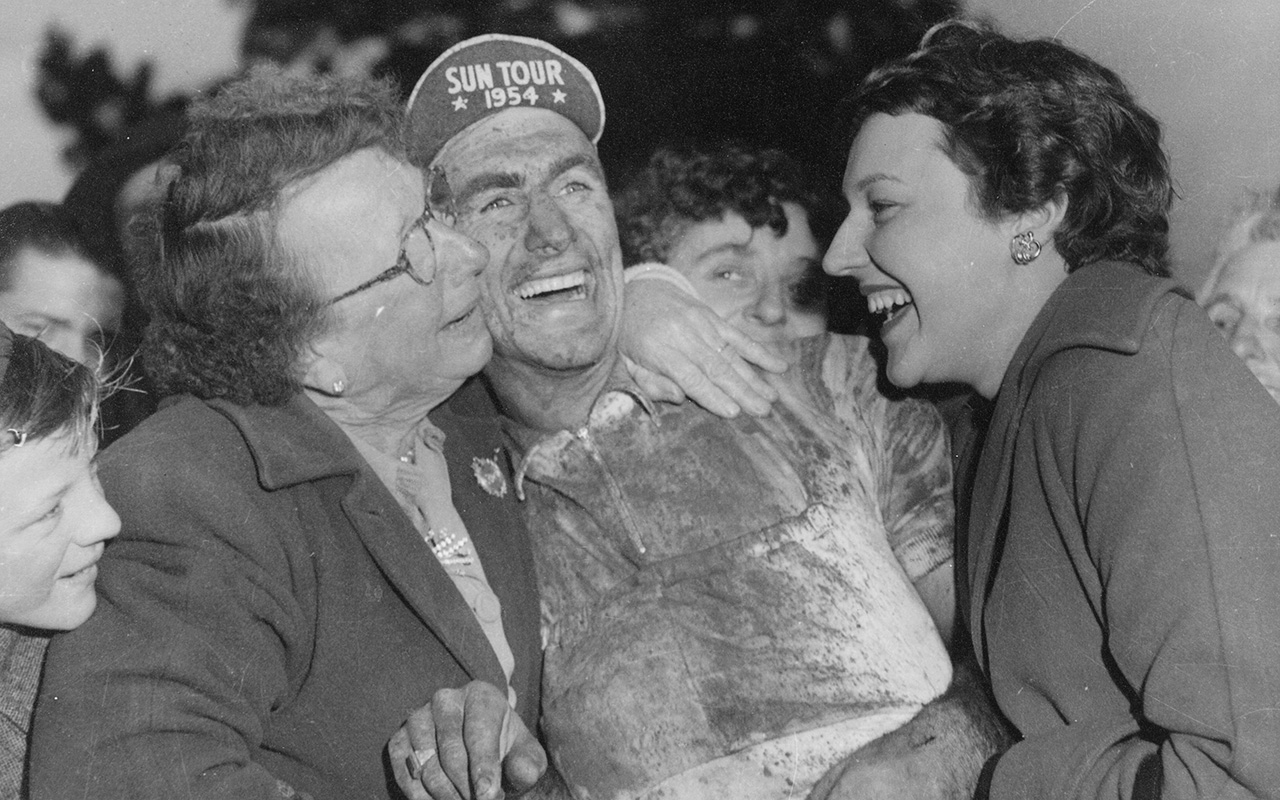
They were great. I rode in five for a 1st, a 2nd, a 3rd, and two 4ths. With a bit of luck I could have won the five.The Sun Tour started in 1952 and was won by Keith Rowley. By the following year I had turned professional and thought I could win. A mistake cost me the race: I allowed Basil Halsall to break away in the Baw Baw mountains on the second last day when I led by 4 minutes 10 seconds. The next year (1954) I won by a record margin of 8 minutes 36 seconds although I had a swollen knee for the last three days. It was worth over 500 pounds which was a lot of money in those days. The Tour covered 1000 miles over 9 days. The next year I started well but finished 3rd behind Alan Geddes, another Footscray rider. After a couple of 4ths I gave the Tour away when I moved to Balnarring. However I went on about 30 more tours as part of the official party.
Punctures were always a problem on the rough roads so Keith Reynolds and I started manufacturing home-made racing tyres in a back shed in Footscray. They had two layers of inside casing and caused me a spot of bother on the 1954 Tour. Some of the other riders complained to Tassie Johnson (race referee) that I was using puncture-proof tyres. I don’t know how you get a puncture-proof tyre but anyway Tassie inspected them and signed them off. The very next stage was a 20 mile time trial at Swift’s Creek and I must have hit the wrong stone.The puncture blew the guts right out of the tyre.
What of the Melbourne to Warrnambool?
This was sponsored by the other popular newspaper, The Argus. I never had much luck in the Melbourne to Warrnambool; I punctured twice, and my gears broke in another. I think the only time I finished was in 1953. If you’re a scratchman in a race like that you have to rely on bad weather as you are giving some of the other riders an hour and a half start.
Who was the best bike rider you ever saw?
Probably Sid Patterson. I competed against him a lot and could beat him on the road but only ever beat him once on the track; then I broke away with 15 laps to go and he never caught me. However if we are talking sprints, Russell Mockridge was also outstanding. Patterson won the world sprint title but we never saw the best of him in Australia. Mockridge was just beaten in the world sprint title, but won the Grand Prix in France; it was probably the best race in the world at that time.
Russell Mockridge was not only a great bike rider, but was probably the best all-round sportsman that I ever came across. Percy Cerutty trained some top class athletes such as Landy and Elliot at his training camp at Portsea, but Mockridge held the record for going round the circuit. One day when we were over in Auckland we decided to watch the swimmers training at the pool. We had taken our bathers, hoping to have a swim later. The swimmers were one short in one of their relay teams and asked us if anyone would like to fill in. Mockridge volunteered; he swam the whole 100 yards under water and beat the swimmers. Another day we were giving the track team a bit of cheek and the hurdler, Ray Weinberg, said, “Never mind having shots at us. Give us something to run against”. He offered to give us 10 or 15 yards start but Mockridge only started a yard in front. After 130 yards he was still in front!
When Mockridge was at university he was in the Queens College rowing eight to keep fit and on one occasion when he came back from London he could beat everyone on the boat at table tennis except a bloke named Keith Miller who was also good at most sports.
Mockridge was also good at football at Geelong College but took up cycling as he could keep his glasses on. A bloke from Geelong said to me one day, “If Russell had had good eyesight, he would probably have been the greatest all round sportsman Australia has ever seen.”
To get back to your question, I reckon Patterson, Mockridge and Billy Guyatt would be hard to separate on the track.Another good rider was a little bloke from Tasmania named Danny Clarke. As an all-round Australian bike rider, for handicaps, scratch races and match races not too many beat him. Not too many got over him and he had endurance the same as Patto had.
How do you rate yourself, Hec, and what do you consider were your main achievements?
I was good at both track and road and one expert classed me as the second best all-round cyclist that Austraalia has produced – second to Bill Moritz. However I couldn’t beat Mockridge in a pure sprint: a mile or more and I had a show. But on the road he never worried me.
I won about 400 races, including seven Australian amateur titles, during my career which more or less finished at 26. However my best feat was to win the Victorian professional 5 miles championship in three successive years (1954,’55, and ‘56) when stars like Mockridge, Reynolds and Patterson were in their prime.Winning the gold medal at Auckland in 1950 and the Sun Tour in 1954 were also highlights.
There is one record that I was particularly proud of. One year I was the single scratch rider in the Melbourne to Heyfield which was 120 miles. There were 6 off second scratch and it took me 20 miles to catch them but I went through and got fastest time. My time of 4 hours 45 minutes 2.5 seconds was a course record. Now there was an Australian champion, McNamara, who was acclaimed as one of Australia’s greatest riders and he rode from Colac to Melbourne (100miles) in 4 hours something. When I crossed the 100 mile mark in the Heyfield race I was 17 minutes faster than McNamara. I asked about claiming the record but it was refused as there was only one clock on it. I said,”Don’t tell me there was more than one clock when McNamara got the record!” They still didn’t give it to me as they insisted there had to be more than one clock.
What of Cadel Evans?
He’s a good little road rider but I don’t think he believes in himself. He always seems to look for an excuse instead of saying “they have only two legs and two arms, the same as me.”
(Note: Shortly after Hec passed away in March, Cadel Evans won the 2011 Tour de France. Later that year John Trevorrow, organiser of the Herald Sun Tour and winner of three Sun Tours, arranged for the 2011 Herald Sun Tour to pass through Balnarring where cyclists competed in the Hec Sutherland sprint in Warrawee Road.)
Tell me how you got involved in the Melbourne Olympics
These were in 1956 which was well after I turned professional. I had been helping the two tandem riders but then Billy Guyatt was given the official responsibility of looking after them.However I was out at the Village this day when someone sang out; it was a young South African rider whom I had met at the world titles in Italy.When I told him I had no official role the South African said, “Well, what about coaching us.” So I became coach of the South African cycling team. They did OK, coming second to the Australians (Brown and Marchant) in the tandem. I had told them how to win but they ignored my advice; they apologised later.
Before we move on from cycling, Hec, tell us about two other identities: Oppy and Morettini
OPPY was probably Australia’s greatest long distance road rider. He was not a sprinter but had terrific endurance. Although he was before my time we had a few rides together after the war as we were both Malvern Star. Oppy had a room of his own at Malvern Star with all his gear and memorabilia in it and I often sat there talking to him.
One Saturday night I watched Walter Lindrum play a chap from South Africa in a snooker tournament at the Melbourne Town Hall. On the Monday I was telling Oppy about it and said how good Lindrum was and how they had changed the rules to give other people a chance to win. Oppy told me he was going to see him later and asked me if I would like to come. So we walked around to Middle Park where Lindrum lived; Oppy loved walking or riding his bike and would walk 5 or 6 miles or ride his bike to and from work every day. We visited Walter Lindrum three or four times over the next month and I really enjoyed talking to him; he was not big headed in any way. Oppy was a top bloke, too. Good and all as he was, and with all that he achieved, he was only too happy to help anyone if he could.
Now let me tell you of my battles with MARIO MORETTINI. The Italians always had some top bike riders and in the early 1950’s Morettini was one of them. When I was riding in the world track titles in Italy, following the road races, I raced against Morettini in one of the semi-finals. He was as big as Patto. Because of my injuries from the road race, I couldn’t get out of my seat and also had to ride a different gear to what I was used; I didn’t have a chance of beating him. He finished ahead of Mockridge in the final.
When he came out here to race, I told Ted Waterford (promoter at the North Essendon Board Track) that I wanted to race him. He had already beaten six of the best in Australia and Ted told me I was wasting my time. I said, “Look, Ted, you pay me 12 pounds a week to ride. If you give me a ride against Morettini and I win then you pay me an extra 5 pounds; if I lose you take 5 pounds out of my pay.” One of the pressmen said, “You couldn’t get a better deal than that, Ted.” So he agreed.
In the first heat Morettini stopped riding during the last furlong and raised his hand in protest; he claimed that I had chopped across in front of him and touched his front wheel. The referee dismissed the protest while the crowd booed the Italian. In the second heat he was in a winning position 200 yards from home but I managed to slip past him in the straight.The big fellow cried and Waterford looked at me and said, “There’s something about you that’s not right. I know you can beat these blokes over 5 miles, but in the shorter distances you seem to put on weight and grow now and then. I don’t know what to do.” So I said, “The best thing you can do is let me race him again and try to get your money back.” He looked at me and laughed. Two weeks later we both got in the final of a derby with three other riders. I asked Ted if he wanted the bet again but he said I would probably put all the other riders against Morettini. I told him that I wouldn’t; I said, “You know the way I ride and the way he rides, so you know he’ll be out in front and I’ll be out the back somewhere looking for pigeon holes to come through at the finish.” So he agreed to the 5 pounds again. I won again! A few weeks later we were in another final and Ted wanted another bet but I said, “No. I’m sick of taking money off you, Ted.” In fact I knew I couldn’t keep beating him.
What brought you to the Peninsula?
To answer that I need to go back a bit. When we were living in Footscray, around 1955, I knew a chap who had greyhounds and he told me they were building a dog track at the North Melbourne Football Ground. So I rode over on my bike and asked to see the boss. They pointed him out to me; his name was Harold Mathews and he was the president of the Greyhound Association. I told him I knew how to dish rails for the concaves, something I learned with the blacksmith. He said to start next day so I did all the concaving of the running rail.When they started the trials I drove the hare and did that all the time they were at North Melbourne and also later when they moved to Olympic Park. So that was another sport that I got involved in.
One day at Olympic Park this chap (Jack French) was telling us about the garbage and sanitary contract on the Peninsula; a bloke I was friendly with (Chester Reid) suggested we look into it. We put in a tender which was successful. We bought a Bedford truck and became responsible for sanitary and garbage collection from Baxter to Flinders. As a result I moved from Footscray to Balnarring in 1957 with my wife (Margaret) and baby daughter (Glenda).
How and when did you meet Margaret?
I had just returned from Italy in 1951 and was down at Malvern Star talking to a mate when this sliding window opened and Margaret’s face appeared. When the window closed I asked Les, “Who’s that sheila?” Les said she did the typing and office work. I said, “I’d like to meet her” and things progressed from there, even though at that time she couldn’t ride a bike! We were married at Thornbury Methodist Church in October,1952.
How did you get into football?
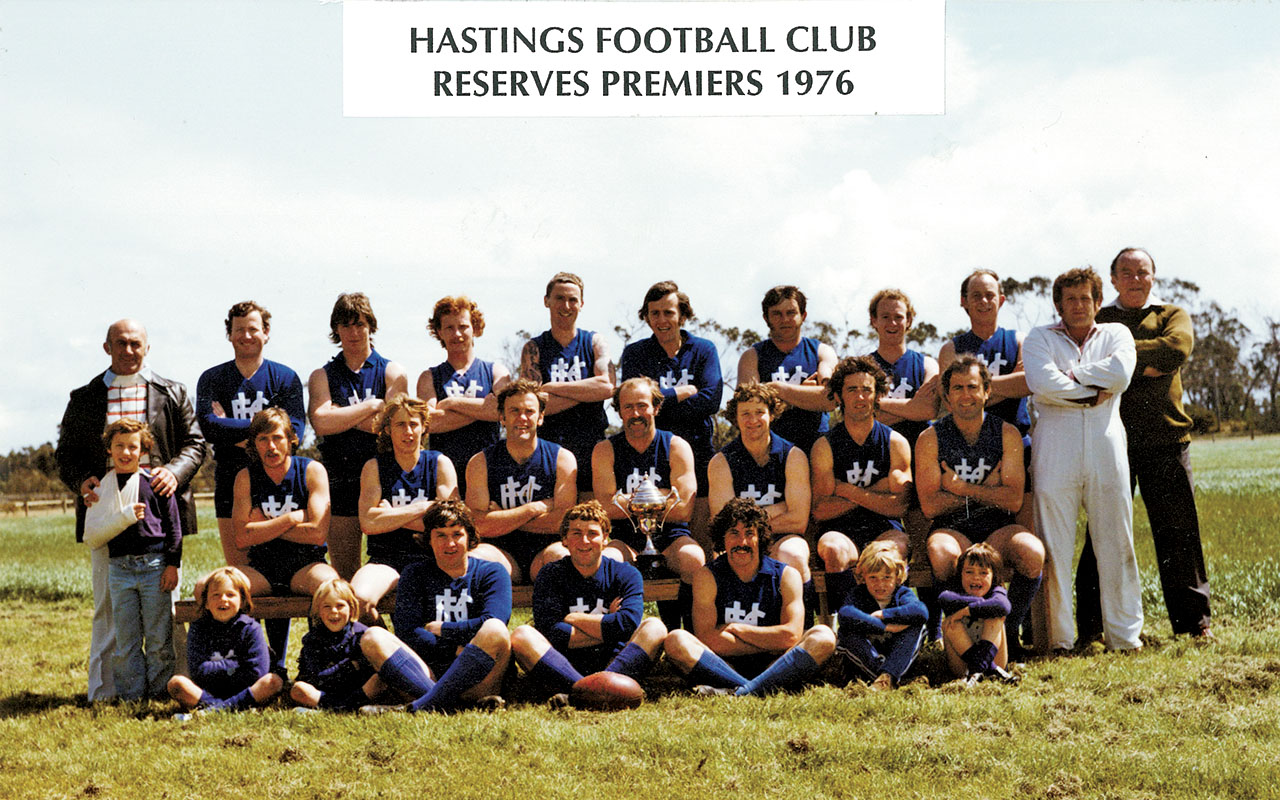
I really loved football.When I was riding the bikes at Footscray I was rubbed down by one of the masseurs at Footscray Football Club by the name of Sam Trimble. I got to know Teddy Whitten and a lot of the players. Athough I played a bit with some of the local sides I really only got into it when I came down here.Although I played mainly in the seconds I played 16 senior games for Hastings between 1958 and 1964. After giving it away for a few years I was asked by Norm Francis if I would coach the seconds.Norm knew that I got on well with the younger kids. I did this for 3 years (1974-1976) and we won the premiership in the last year. Then I spent some time on the committee.
I gather you also showed an interest in cricket and tennis?
I wasn’t much of a cricketer but I loved to go and watch Billie Crosbie and Brian Thornell play. I filled in at times for Hastings and played a season at Tyabb. I made a few runs but my main strength was fielding. I also played B grade tennis at Crib Point.
What about snooker?
I always fancied myself as a snooker player and, when my football days came to an end, I decided to join the local team. A snooker tournament covering the whole of the Peninsula had started and we played in different hotels each week. Our Hastings team kept on winning. The day before the final, to be held at a Guest House in Rosebud, I was dinking my son Ken when he turned to speak to Lee, his brother, and stuck his foot in the front wheel. We both fell off. Ken broke his leg and put his teeth through his lip. He had to go to the Children’s Hospital by ambulance, have his leg set in plaster and have plastic surgery on his facial injuries. When it happened I tried to hold onto Ken so I couldn’t put my hand out to save us. My sunglasses cut right around my ear and I had to have it stitched. I also had concussion. It was my worst fall off a bike since I hit the copper in Italy in 1951.
This happened on a Sunday morning and I had to go back to the doctor on the Monday to have the bandages changed. My eye was pretty swollen, as the glasses had cut my face as well as the ear, so I asked the doctor to tape up the eye so that I could see out of it as I was playing in the finals of the snooker tournament that night. He thought that was a joke. Well, he taped it up for me but when one of my team mates called to pick me up that night, he took one look at me and said, “You’ve got to be joking! You’re going nowhere.” Well, I convinced him that I was and off we went. When we walked in the bloke I was to play looked at me as if to say, “This will be a cakewalk.” He found out differently because I beat him. I wanted to play in another big tournament but with the garbage contract I had to get up early so that put an end to that.
And then there was bowls?
In 1980 I was “led” into bowls by a friend-local copper Peter Dick. He walked into the Hastings Football club one day and I asked him how he went. He said, “I won.” Every week he seemed to win. I said to him one day, “No one can win that much; it doesn’t matter what sport it is.” Next week when I saw him he asked me if I had $5 and I thought he must have left his wallet at home. I gave him the $5 and he gave me a piece of paper and said, “Here, mouth, sign this.” It was an application to join the Hastings Bowling Club. Ron Deed, who was a really good bowler, encouraged me to play in the Novice Singles, which I won. I ended playing with Ron in the championship. Then we entered Country Week and, with two other players (George Bartley and John Hannant) we won the fours. A year later I was a member of the winning triples team. At club level I won singles, pairs, mixed pairs and fours.
A bowling club eventually started up at Balnarring and I joined there as it was closer to home. I played a lot of bowls for a few years in pennant, tournaments, and championships and did pretty well, but after having a stroke about 10 years ago I can’t see very well and have pretty much given it up.
And then there was a return to the horses
I started training in 1963 for the well known Smith racing family who bought 30 acres in Balnarring near the cricket ground. There were 8 stables and a training track, plus another 7 “boxes” at home. At that time we lived on an acre where the school used to be. Three or four of my horses won about 6 races each-Monte Cristo, Bosnia and Burford. All were good horses that had been with top trainers in town but had done nothing. One of them had been with Mick Alessio in town and did no good but after I had him for a while he won at Cranbourne at 25/1.
I used training methods similar to those I used as a bike rider when I was preparing the team of 15 horses that I had at one time. I gave them plenty of long, steady work, sometimes up to 8 miles a day. This paid off, particularly with a horse called Polar Light which I saved from being shot as it was considered a “ hopeless crock.” After some solid conditioning he won 5 races from 9 starts. He was so solid he could go round again after winning a distance event. When a new horse arrived at the stable I would spend hours studying his or her moods and habits. They’re like kids; sometimes it’s just a little thing that will coax them into eating the food they need.
Eventually the Smiths decided to get out of racing and sold the training facilities that they had bought for me at Balnarring. After that I trained a few horses for local owners. All told I had 55 winners, 91 seconds, and 101 thirds. I would have loved to win a Grand National; I only had one start but the jockey did the wrong thing. About 5 of my wins were steeples or hurdles.
I had one very unpleasant experience during my time as a horse trainer. I was in the stalls at Mornington Racecourse one Saturday when there was this tremendous explosion.The horse next to mine, only about 5 yards away, had been pawing the ground and had struck an old shell which had been left behind when the army occupied the course during the war.When the dust cleared I saw this young apprentice jockey lying on the ground. He was badly hurt around the legs. I picked him up and carried him to the ambulance which was having trouble getting through the crowd. Unfortunately the lad died. The horse, Daltreuse, was injured by the fragments and had to be put down.
How did you manage to fit everything in?
Well I enjoyed the extra activities, especially the horses. I was never frightened to get my hands dirty or work long hours. As well as the cartage contracting business I was also in charge of the maintenance at Esso for about 15 years. I had about 30 blokes working for me over there. However the stroke put an end to all that and in 2000 we sold the property in Balnarring Road and moved into town.
Did you ever feel tempted to make a comeback to bike riding?
Although I more or less “retired “ when we moved down here, I rode spasmodically over the next few years: in 1958 I rode in a 6 day race at Olympic Park Velodrome (the Milk Six) and a few races the following year. My best performance was winning the Russell Mockridge Memorial Sash in the 140 mile Tour of Gippsland. When I was 42 I was talked into fronting up for a big race in Wangaratta; it was a race I had won 20 years earlier in 1952. It was a hot day….(At this point Margaret, who was sitting nearby, chimed in:”It wasn’t a pretty sight.”)
Tell us about the Sports Parade, Hec
During the late 50’s-early 60’s the Sports Parade was held in the Melbourne Town Hall on a Friday night and was compared by Tony Charlton and Merv Williams. They had different guests each week and raised money for charity. The Hall was always full. This brought different sportsmen together; they seemed to have a special bond and would help one another out. On one occasion when Daryl Baldock was coaching Latrobe in Tasmania they rang to see if I would help them organize a Sportsmans Night. They gave me a week to find someone. I tried Keith Stackpole but he wouldn’t be in it. When they rang and I told the bloke who I had lined up, the phone went dead. When he rang back I asked him why he had hung up. He said he got such a shock when I said Lionel Rose and Johnny Famechon were coming. They both said “yes” straight away when I spoke to them; no fees, just fares and accommodation.
The Tasmanians kept ringing to make sure it was OK. When our plane arrived in Tassie I told Lionel and Fammo to stay in their seats. I went down the steps to the press and cameramen who asked “Where are Fammo and Rose ?”. I said “They pulled out at the last minute”. The press people said “We knew that would happen.” Just then Fammo and Rose appeared. There was great excitement.
Tributes
Hec’s contribution to cycling has been recognised in a number of ways over the years. Just two are:
1. Inclusion in a series of stamps issued by Australia Post in 2001 featuring Australia’s cycling greats who won the Sun Tour.
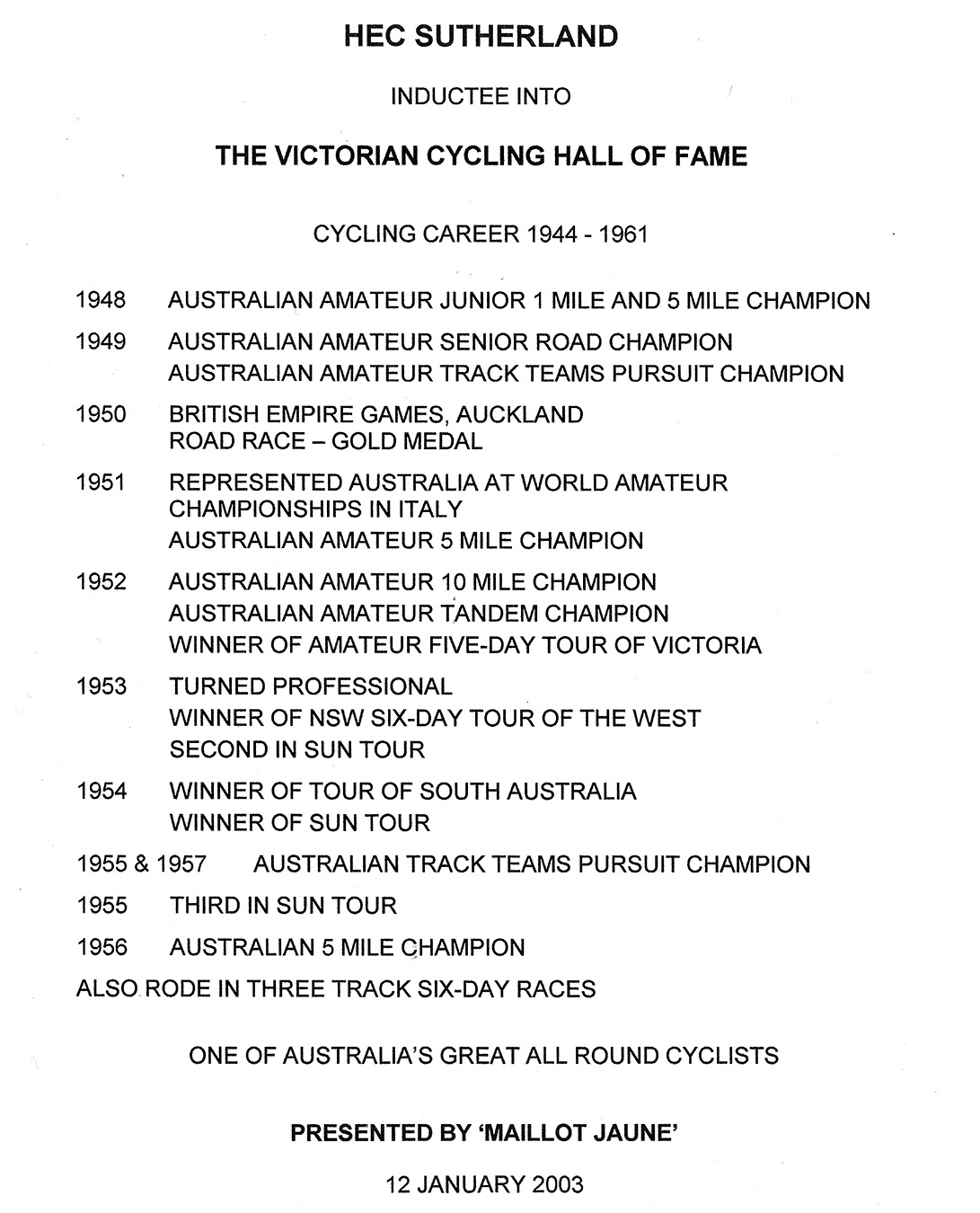
2. Induction into The Victorian Cycling Hall of Fame (see below)
Postscript
Margaret Sutherland, now 92, is still a resident in Balnarring. During the course of the interview passing reference was made to daughter Glenda who was born in Footscray and sons Lee and Ken who were born after the family moved to Balnarring. Glenda still lives in Balnarring and has a son who also lives in Balnarring. Lee is the proprietor of Peninsula Diesels, based in Mornington, and lives in Langwarrin South. He has three daughters and four granddaughters. Ken, also a diesel mechanic, lives in Crib Point and has a son and daughter.