
By Peter McCullough
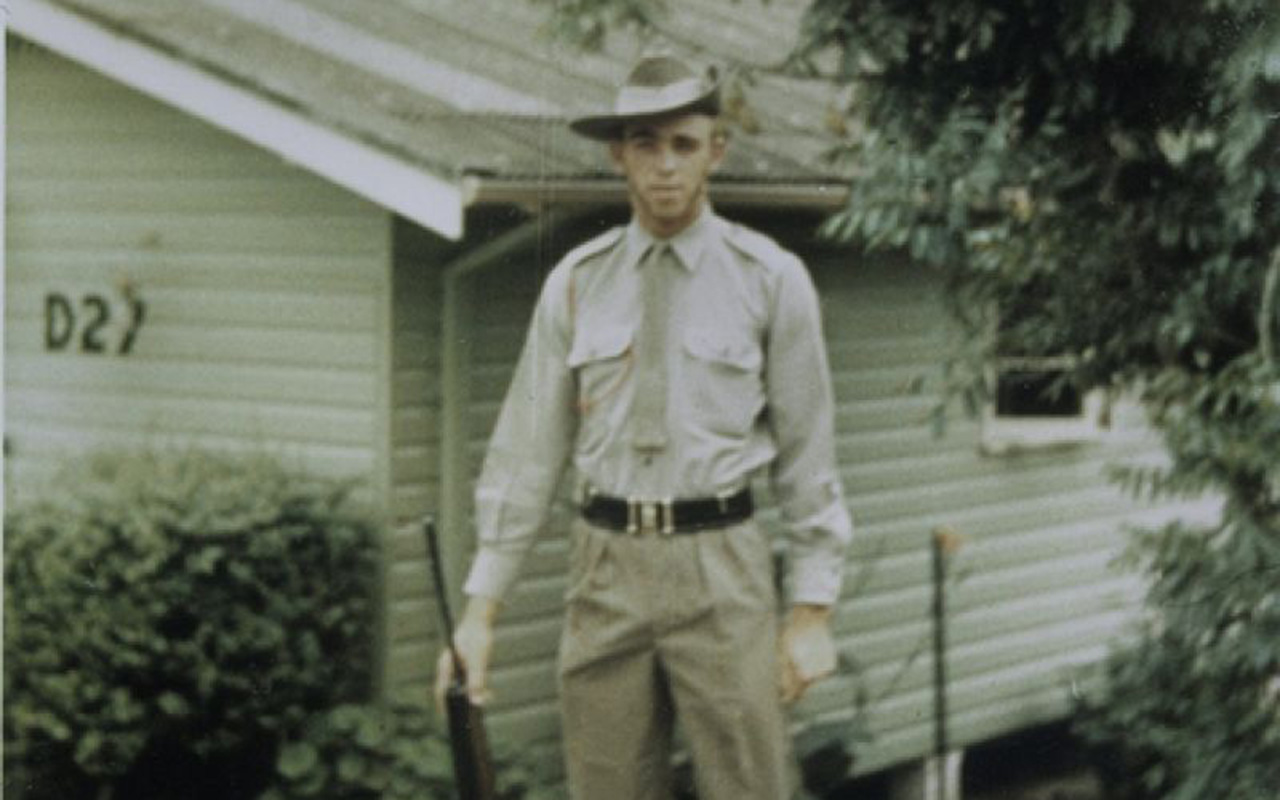
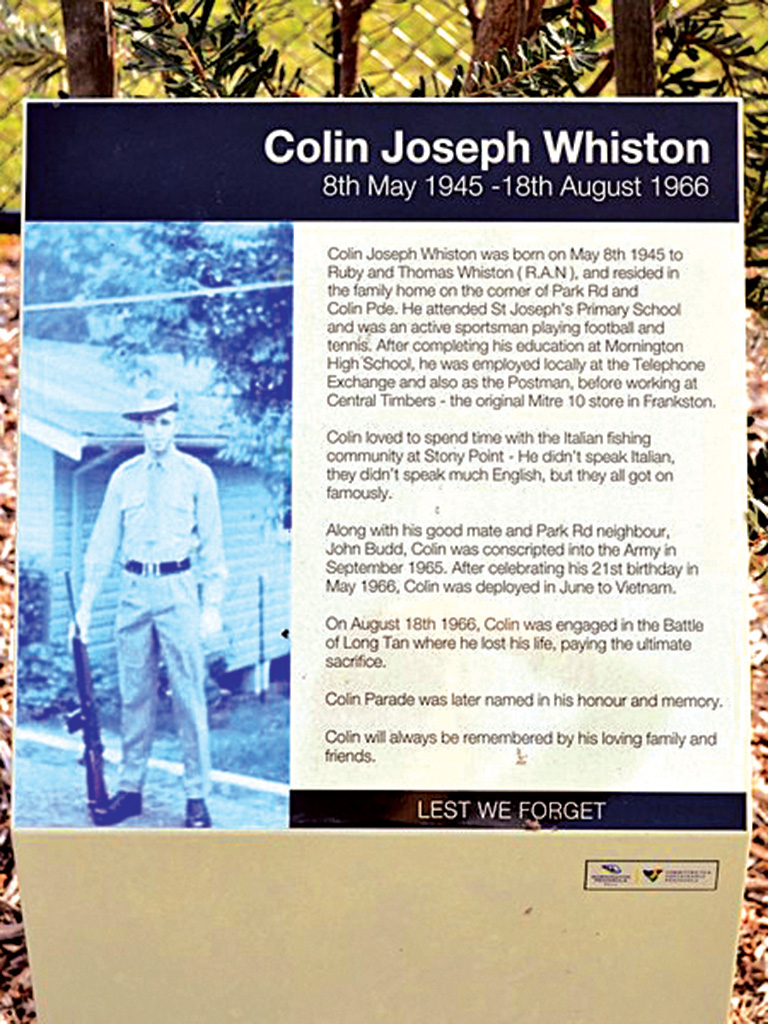
Memorial services were held across Australia on 18 August to mark the 50th anniversary of the Battle of Long Tan. It was Australia’s costliest day of the Vietnam War when 18 soldiers were killed. One of them was Colin Whiston, a 21-year- old National Serviceman from Crib Point.
What was National Service?
Since Federation there have been four different national service schemes. The first was the Universal Service Scheme which ran from 1911 to 1929; it required all males aged 12 and over to undertake military training in either cadets or Citizen Forces. (This custom of training boys as young as 12 was evident even in the 1890’s, often with undesirable consequences. At the Hastings State School in 1893 12-year-old Francis Incigneri, a member of the school cadet unit, was killed at the rifle range set up in one corner of the school yard).
Following the outbreak of World War Two a militia training scheme was introduced in 1940; it required all unmarried men who turned 21 to complete three months of training in the Citizens Military Forces (C.M.F.). This scheme ended in 1946.
During the Cold War over 280,000 young Australians were conscripted in two different major schemes of compulsory military service. The first of these schemes (1951-59 ) was aimed at 18-year-old males for 176 days of training followed by reserve service. It was gradually phased out and by 1959 a ballot (one in five) had been introduced.
The second conscription scheme (1964-72 ), known as ‘Selective Service’, targeted 20-year-old men via a birthday ballot for two years of full-time army service. It was often used to bolster numbers for the Vietnam War. A tour of Vietnam was typically 12 months and the first national servicemen to serve there arrived in 1966. Over 63,000 were conscripted in this scheme with more than 15,000 serving in Vietnam. A total of 524 lives were lost, 212 of them conscripts, and over 3,000 were wounded. Intense political and social debate occurred during the 1960’s , particularly with regard to the dispatch of conscripts to Vietnam. Draft resistance grew and anti-conscription movements such as ‘Save Our Sons’ gathered strength. Protest rallies clogged the city streets before the scheme officially ended in December 1972.
Colin Whiston
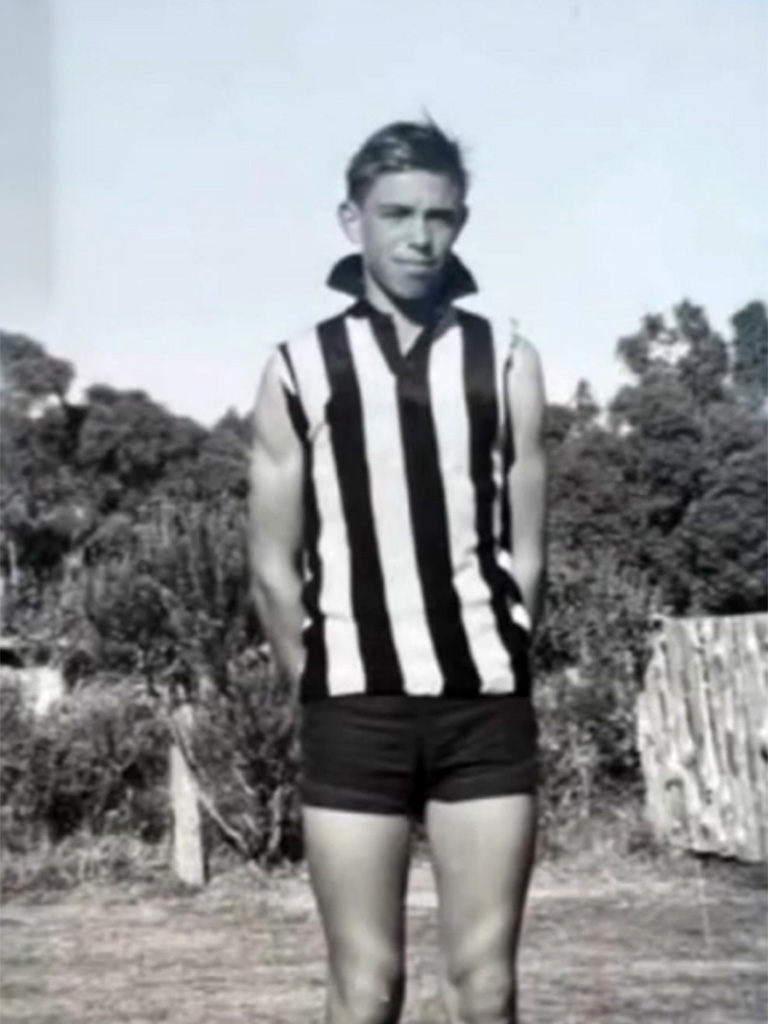
Colin was born in Sydney on 8 May 1945 and the family moved to Crib Point when he was quite young. He attended St. Joseph’s Primary School in Crib Point and then Mornington High School. Colin had a keen interest in Australian Rules football and, as he was over six feet in height, he became a ruckman in the Crib Point Under-17 team. In 1963 the club won the premiership for the Nepean Football League’s third eighteen; Colin was a key player. He played 43 junior games with Crib Point followed by 63 games with the seniors.Colin also enjoyed playing tennis and loved fishing. After leaving school, Colin was a postman for a time but was working at Central Timber in Frankston when his call-up papers for National Service arrived.
The Battle of Long Tan
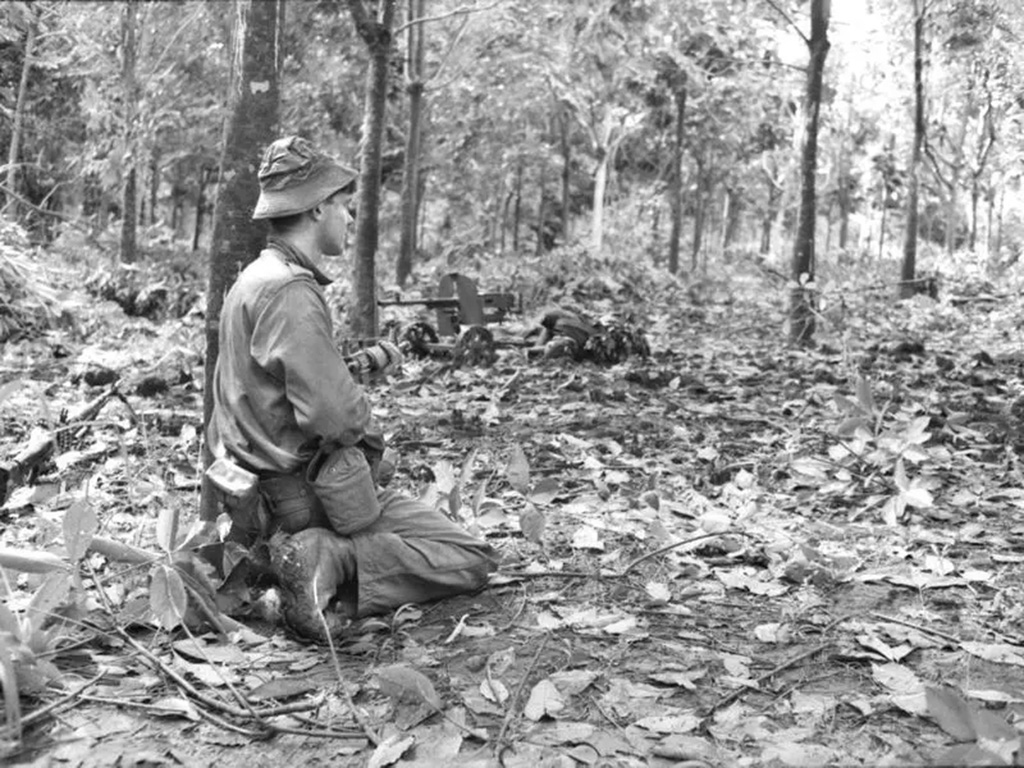
Beginning his National Service on 26 September 1965, after training at Puckapunyal and Ingleburn, Colin was posted to the 1st Australian Reinforcement Unit at Vung Tau, arriving in Vietnam in mid June of 1966. In August he was posted to the 6th Battalion, Royal Australian Regiment. He joined his unit on 16 August1966 and was sent to 11 Platoon, D Company. The Australian War Memorial’s account of Colin’s involvement and death in the Battle of Long Tan is as follows:
“In the early hours of the 17th August, Nui Dat was hit by mortar and rifle fire, causing 24 Australian casualties. Patrols were sent out and soon located the enemy firing positions, but the Viet Cong had withdrawn. The next day D Company moved into the Long Tan area. Shortly after 3 pm, 11 Platoon came into contact with enemy forces in the Long Tan rubber plantation.
The enemy withdrew, 11 Platoon followed up.
At approximately 4 pm, 11 Platoon encountered heavy opposition and began taking casualties.
Whiston was hit and killed by multiple gunshot wounds in the opening seconds of the battle. In minutes, 6 Section was all but wiped out. Engaged from three sides, the platoon was in danger of being cut off. Monsoonal rain deluged the area, reducing visibility and turning the ground into slick, red mud.
In the hours that followed, a numerically superior Vietnamese force attempted to overrun D Company. Well-controlled artillery fire and ammunition resupply flown in by Australian helicopters helped stave off disaster. That evening armoured personnel carriers arrived and linked up with D company, and as night fell the enemy withdrew.
Next morning the men of D Company returned to the battle site and recovered two of their badly injured comrades. Colin and the rest of the fallen were found still lying at their weapons, having died defending their positions. The Australians recovered three wounded Vietnamese soldiers and buried over 245 of their dead.”
Return to Crib Point
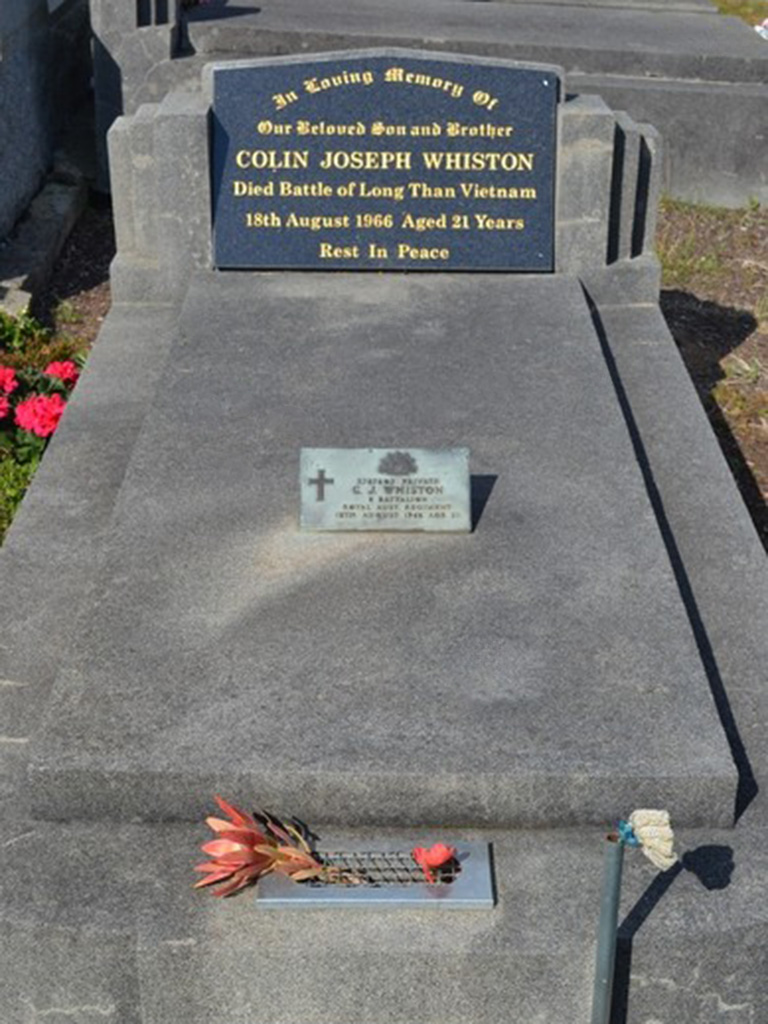
Colin Whiston was only 21 years old and had been in Vietnam for seven weeks. His remains were returned to Crib Point and he was laid to rest in the Crib Point cemetery. Colin Parade, which leads to the Crib Point Reserve, is named in his honour as is the best-and-fairest award for the Crib Point Football Club. A memorial plaque has been erected in Colin Parade.
The Whiston Family
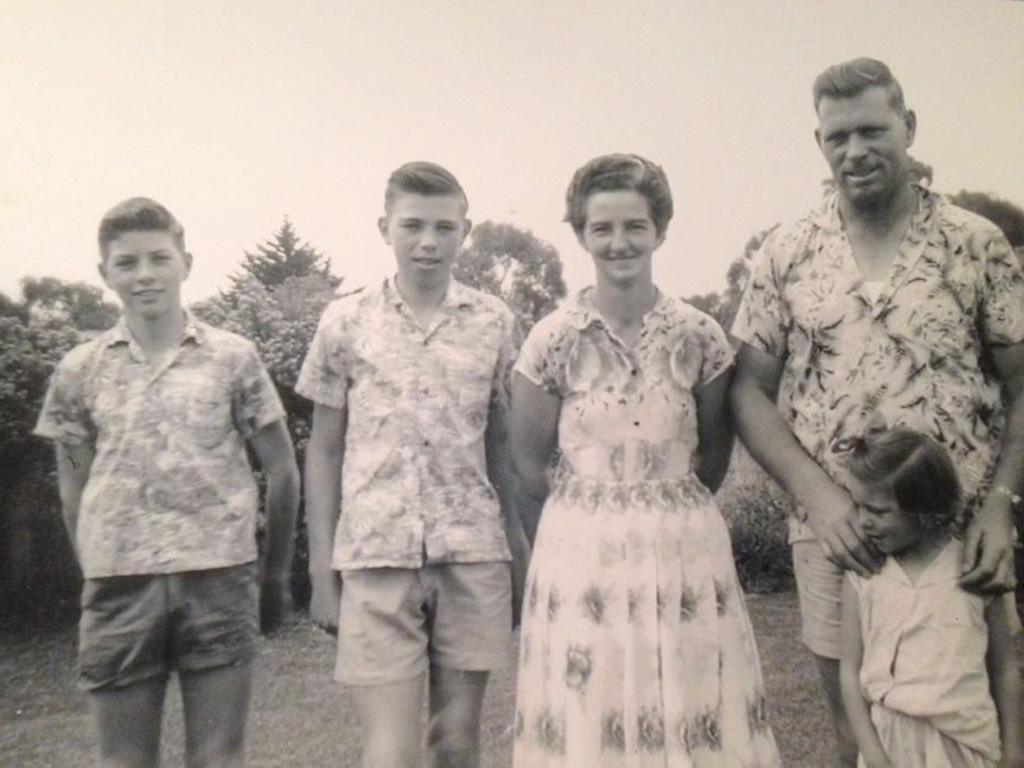
In country towns there are often families which make a significant contribution to a particular aspect of community activities; more often than not it is the local football/netball club. The Whistons were such a family Tom and Ruby Whiston arrived in Crib Point in 1945 and purchased a house alongside the football ground where they raised a family: Colin (born 1945), Terry (1947) and Michele (1955).They became involved in the re-formation of the Crib Point Football Club in 1947; this was the start of a remarkable 30 year period of dedication and service to that club.
Apart from the restoration of the former oval, Tom Whiston fulfilled a multitude of roles and tasks including on-going maintenance of the grounds and surrounds, marking out the ground, gatekeeper, timekeeper, boot studder and property steward. He was Team Manager for the fledgling Under-17 sides of which Colin and Terry were members, and he was a committeeman for over 10 years.
In the early days, when facilities were limited, the umpires bathed and dined at the Whiston’s home after the match. Ruby Whiston supported the club as enthusiastically as her husband, particularly in the social activities/fund raising area. Both helped to run the bingo evenings and Ruby was heavily involved in catering and running the canteen. Once a week the family’s clothesline would groan under the weight of jumpers, towels, dressing gowns, socks, canvas tarpaulins and tea towels. Tom and Ruby Whiston were universally loved and respected at the Crib Point Football Club and were the recipients of life membership in the late 1950’s.
And the family? Colin’s contribution has already been noted. Terry Whiston played 100 games with the Crib Point Football Club between 1964 and 1968 and was a star player in the ‘Three Peat’ premiership flags of 1966, 1967 and 1968. Michele Whiston married Kerry Thurstans who played with Crib Point in the 1970’s and 1980’s and their sons (Ben, Scott and Toby) all played with the club in the 2000’s. Ben Thurstans played 111 senior games, including the 2001 premiership team. Toby was recruited by Port Adelaide where he played 110 games. He was among the best players in Port Adelaide’s 2004 premiership and 2007 grand final sides. When Tom Whiston, a Second World War veteran, passed away in 1993, he was laid to rest in the Crib Point cemetery with Colin.
References:
Australian War Memorial ‘Places of Pride’ (internet)
Cusick, Michael ‘Riding the bumps with a grin…AT CRIB POINT.’