
Xavier Noonan was seven years old when he saw the taxidermy fox. It stood in a family friend’s house, with a duck clamped in its jaws.
“Being a little kid who was obsessed with both art and animals, I was like, ‘I want one!’, because it was like the ultimate plush toy,” he says.
His mum refused, but Xavier wouldn’t drop it.
“That’s when I told her that if I can’t buy one or have one, I’ll make one.”
He found a taxidermy kit online in the USA, and his mum struck a deal. He could have it for his 10th birthday, on condition that he didn’t mention it even once before then. Incredibly, he kept his side of the bargain; the kit was his, and it didn’t take long for word to get around about the kid with the unusual hobby.
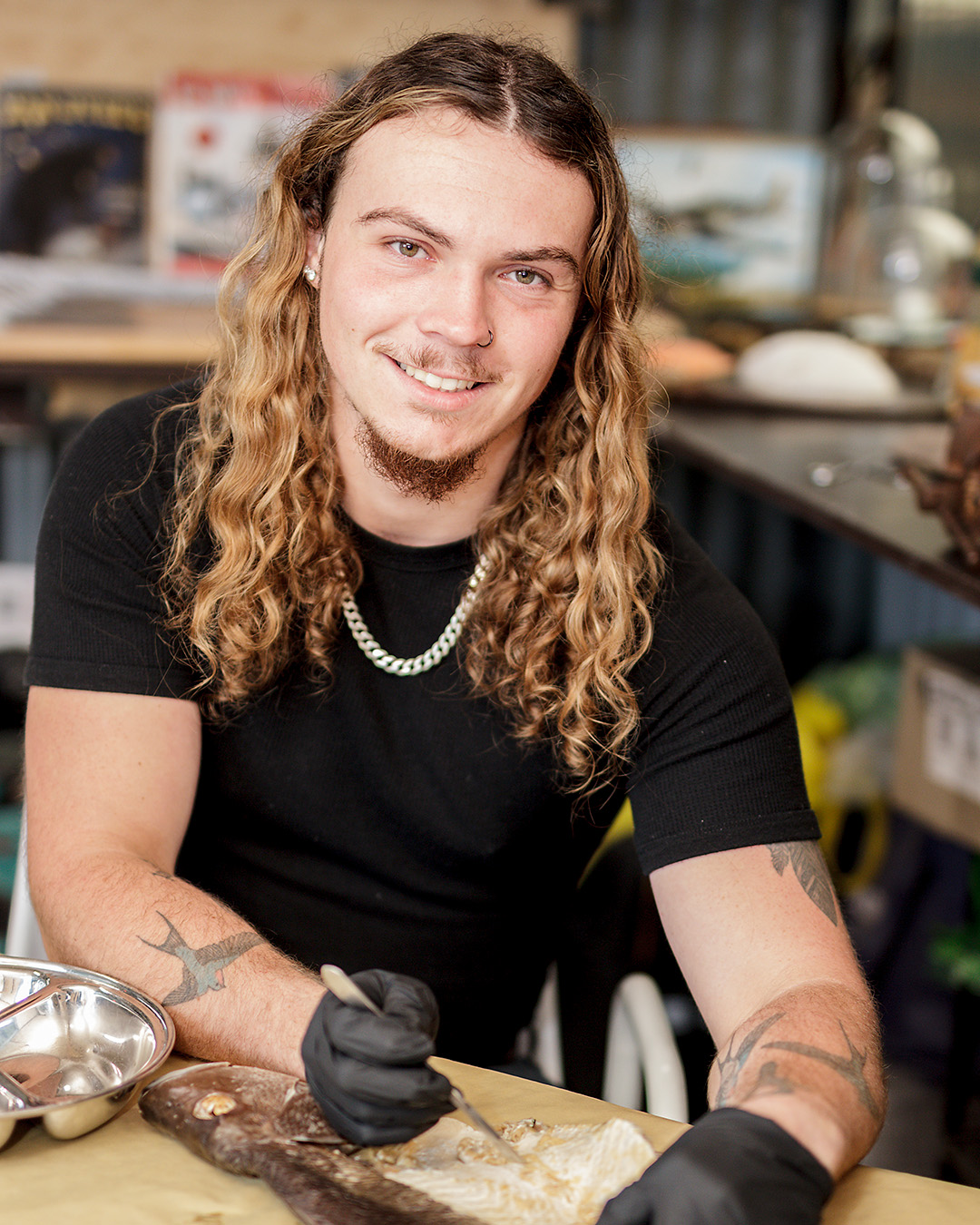
Peninsula Essence readers first met Xavier in 2016, when he was 12 and the walls of his parents’ home already held a stuffed rat, mice, birds, a fox, a duck and a deer’s head. Now 22, he runs Peninsula Taxidermy and has been named a 2026 Churchill Fellow, about to travel overseas to study the craft he has spent more than half his life learning.
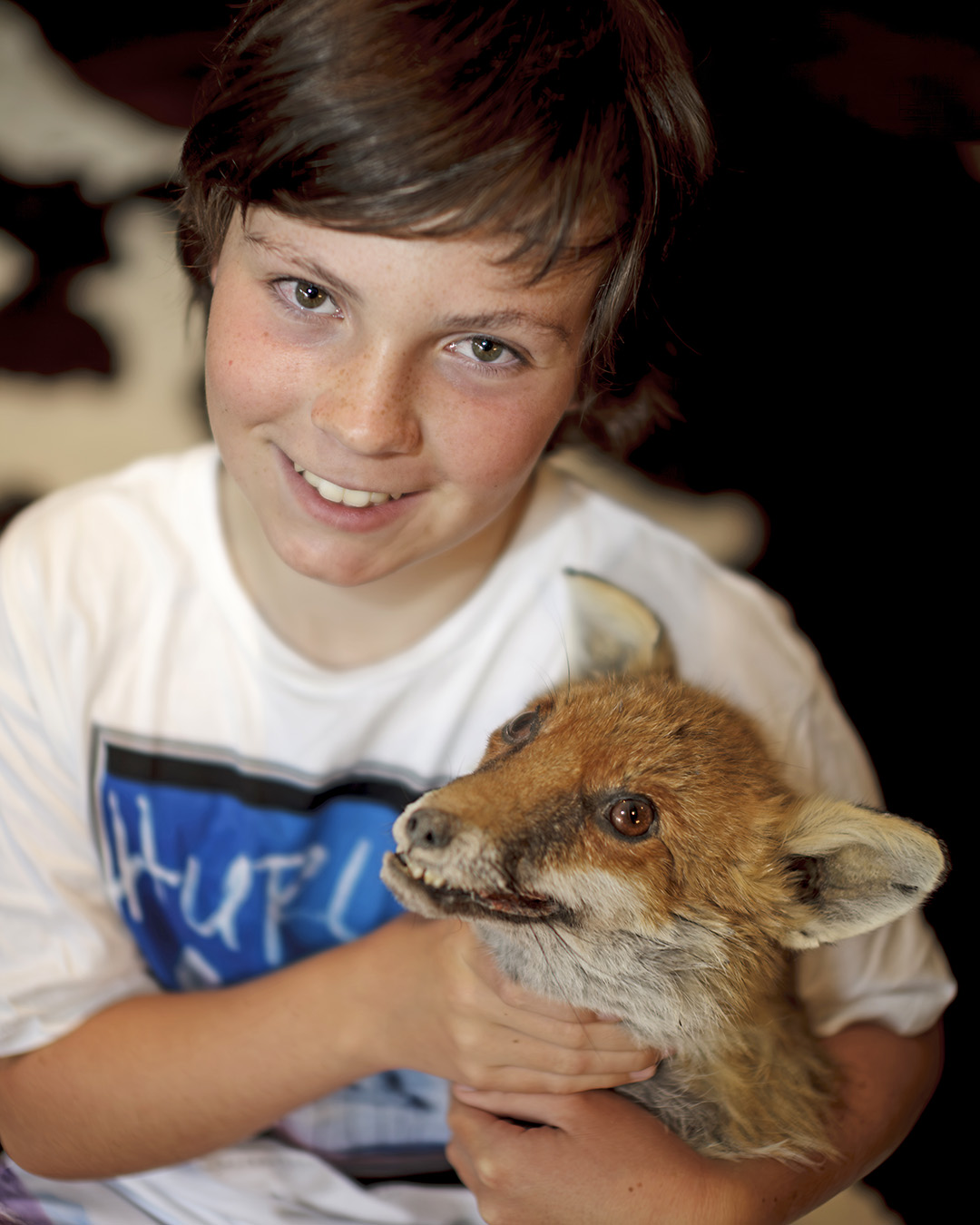
He started out using Google and YouTube until his family discovered John Whitford, a taxidermist in nearby Langwarrin. John invited Xavier into his workshop, showed him the basics and sent him home with old books, VHS tapes and CDs.
“I would sit down with my grandparents, have bacon and eggs in the morning, and we’d be watching these VHSs and CDs on how to taxidermy raccoons,” Xavier says.
His grandfather supervised Xavier working with the scalpels and other instruments like a brain scooper, and the hobby gradually took over his shed. Xavier kept at it through his teens, and the shed slowly became his workshop. Though his grandfather died a few years ago, it’s still where Xavier works today.
The official business came from John. When he retired, and couldn’t find a buyer for such a specialised trade, he offered Xavier the name and all his contacts. Nowadays much of his work comes from anglers with prized sports fish, hunters with deer and foxes, and owners of exotic pets such as parrots and reptiles.
Each job starts the day before, when the animal comes out of the freezer to thaw. While it does, Xavier builds a form, which he describes as a mannequin, under the skin, measuring it against the carcass. The skin is then removed and treated in a tanning process that differs for fish, birds, mammals and reptiles. Once it is ready, it goes over the form to be stitched, glued and posed, and the eyes are sculpted in with clay.
Then comes the waiting. A fish takes about six to seven weeks to dry on its form. Mammals take five days to a week, and deer heads about two weeks before the final touch-ups with paint.
The forms themselves have changed since he was a boy. Back then he wrapped coconut wool in twine to shape a body. Now he uses foam and takes cast moulds from the carcass. Fish have been taking up much of his time at the workbench lately, but birds are the ones he loves working on most.
Not everyone is comfortable with what happens in his shed. At festival workshops, animal activists and vegans sometimes question Xavier about where his animals come from. He explains that since childhood he’s held a Victorian wildlife taxidermist licence, which allows him to work on native animals that have died naturally in captivity, with every specimen able to be traced to its source.
“Everything I work on is legally and ethically sourced,” he says. While he enjoys creating traditional trophy mounts, he has a particular passion for educational pieces that tell a story and encourage people to appreciate and learn more about wildlife.
In Australia, the taxidermy scene is small, so much of his material is imported. Eyes are hand-painted in America or Europe, and many forms created in America, where there are more sculptors who can capture fine anatomical details such as the tendons and veins that show beneath the pelt.
There’s no easy way into the industry for young people, either.
“The only way to really learn the trade would be like myself, which would be self-taught and mentorship through a previous taxidermist,” he says.
With no course or structured training pathway in Australia, the craft survives only as long as experienced taxidermists are willing to pass it on. That gap led Xavier to the Churchill Fellowship. A friend urged him to apply at the last minute, and he was overjoyed to find he was successful.
The Fellowship will send him overseas to learn from some of the world’s best. His seven-week trip begins in the United States, visiting taxidermy associations and observing the five-day World Championship event in Iowa in 2027. He’ll then visit museums in London, France and Germany, meeting taxidermists who care for collections dating back almost two hundred years.
His plan is for the Fellowship to revive taxidermy in Australia through global research, training, and education, bringing home what he learns and building his own programs.
He’d happily do museum work himself one day, as John did for the Penguin Parade and Parks Victoria, but he doesn’t want to keep the craft exactly as it was, with stiff mounts from the Victorian era.
I want to bring both the animals and the scenes they’re displayed in to life by incorporating modern techniques
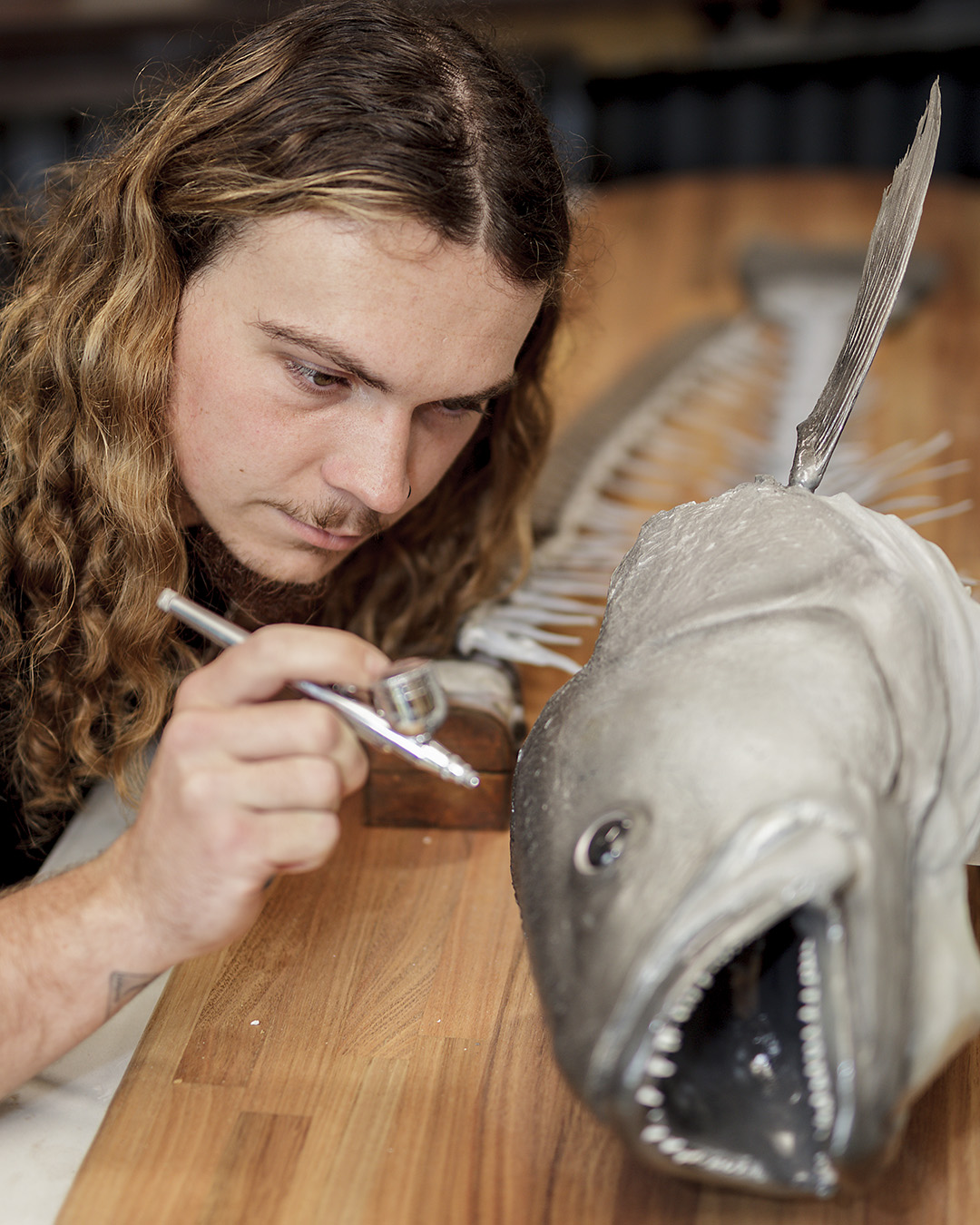
“I want to bring both the animals and the scenes they’re displayed in to life by incorporating modern techniques, such as resin water effects and LED lighting to create realistic light and shadow. My aim is to captivate viewers and create immersive displays where the mounted animals and their surroundings feel as though they’ve come to life.”
It is, more or less, the fox with the duck in its mouth that he saw at age seven, only now he’s the one making it.