
By Ilma Hackett – Balnarring District Historical Society
Captain Bryant Tonkin of ‘Tolcarne’ in Merricks North was a major breeder of Shorthorn cattle on the Mornington Peninsula during the 1880s. Yet he wasn’t born to the land. He was a master mariner who retired from a seafaring life and migrated to Victoria to breed cattle.
A seafaring life
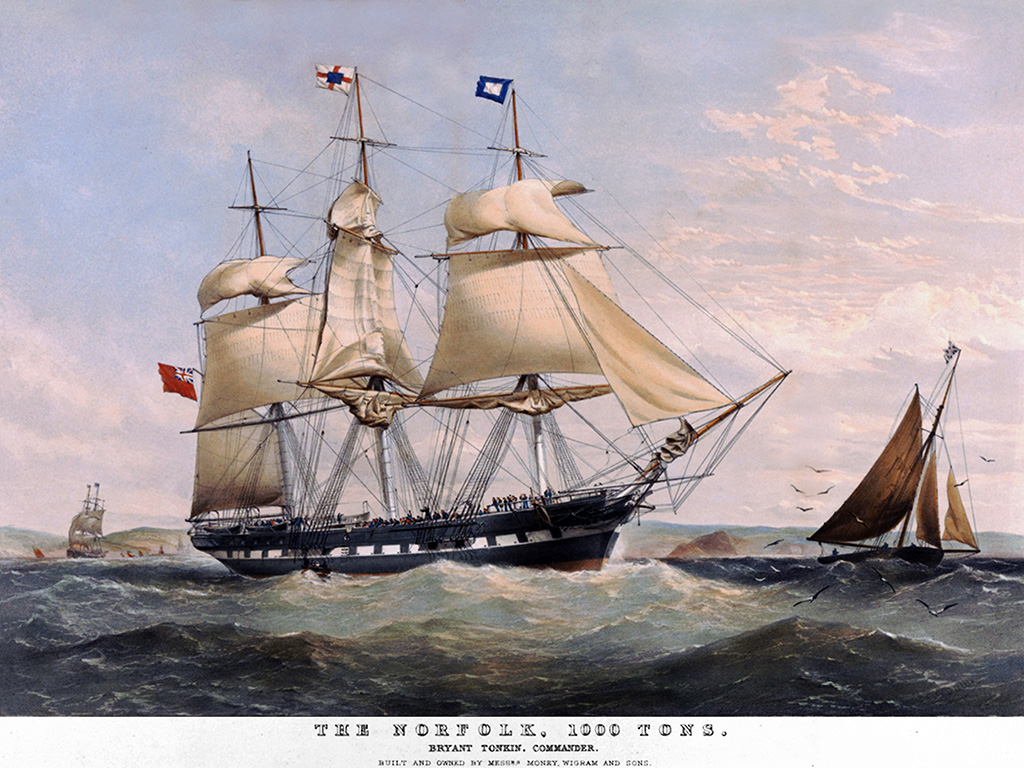
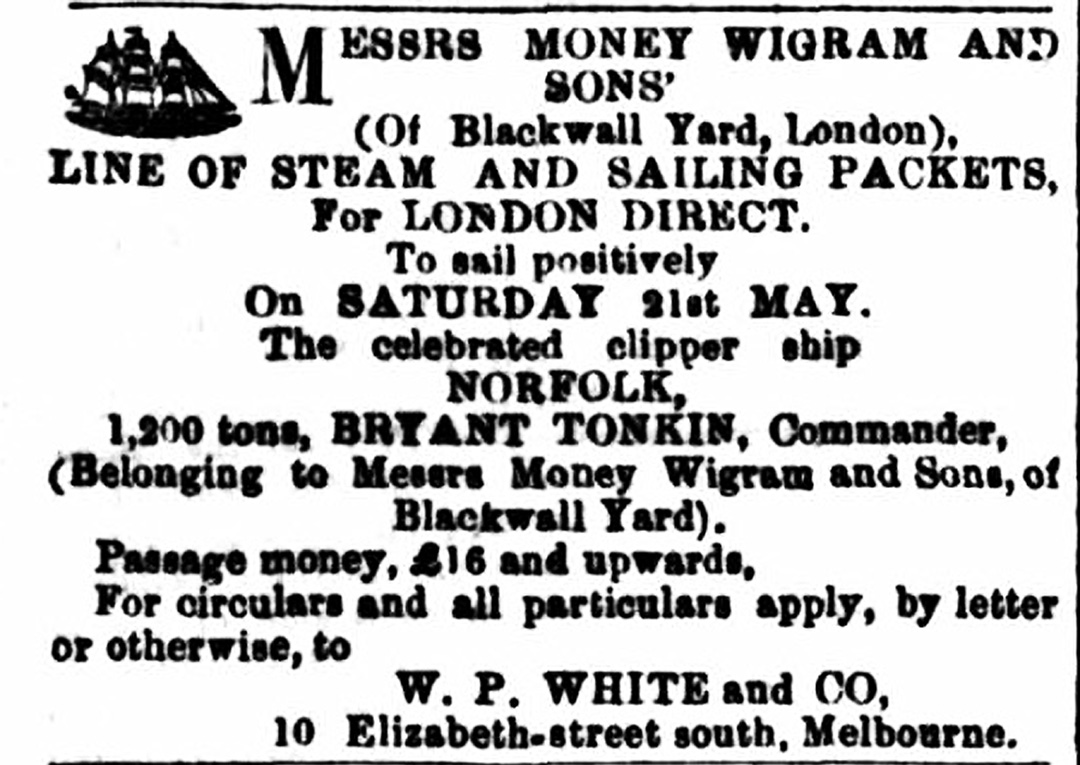
Bryant Tonkin was a Cornishman. Born in 1824, he went to sea as a young man and by the 1860s was a ship’s captain working for Money Wigram & Sons on their England to Australia run. In 1861 he was master of The Southampton and the following year transferred to The Norfolk when Money Wigram retired and the shipping firm was taken over by the sons – Charles, Clifford and Robert Wigram. Tonkin continued to captain The Norfolk throughout the 1860s as it plied between Melbourne and London. On the outward run from England it carried passengers, their belongings, and other goods required in the colonies. The cargo on the return voyage might include bales of wool, leather, skins, tallow, bark, bagged wheat, gold, silver, copper and antimony ore.
Captain of the Norfolk
The Norfolk, built by and for Money Wigram & Sons at Blackwall on the River Thames was a three-masted, five- decked sailing ship made of teak, oak and elm and sheathed with copper. The route taken was the great circle route which took the ship around Cape Horn on the return passage. In May 1861 the ship’s log recorded that “. . . four large icebergs were encountered . . . the largest seen was about 350 feet high”.
In 1864 Captain Tonkin carried a consignment of salmon and sea-trout ova ‘to be placed in the ponds of the Plenty’ (Tasmania). In Melbourne it was found the ova had arrived ‘in a fine state’ and 170 boxes were-reshipped to Tasmania.
The following year Tonkin arrived in Melbourne bringing with him a large trawl-net. He tried it out inside the Bay and outside The Heads hoping to catch quantities of ‘soles, turbot and other fish’. The government schooner, Falcon was loaned to him for this venture which was not a successful one.
In 1866 it was recorded that a “Clydesdale entire horse” arrived in Melbourne in good condition. It appears too that his ship brought prize Shorthorn cattle to Port Phillip for two Peninsula cattle breeders, John Benn and James Teasdale.
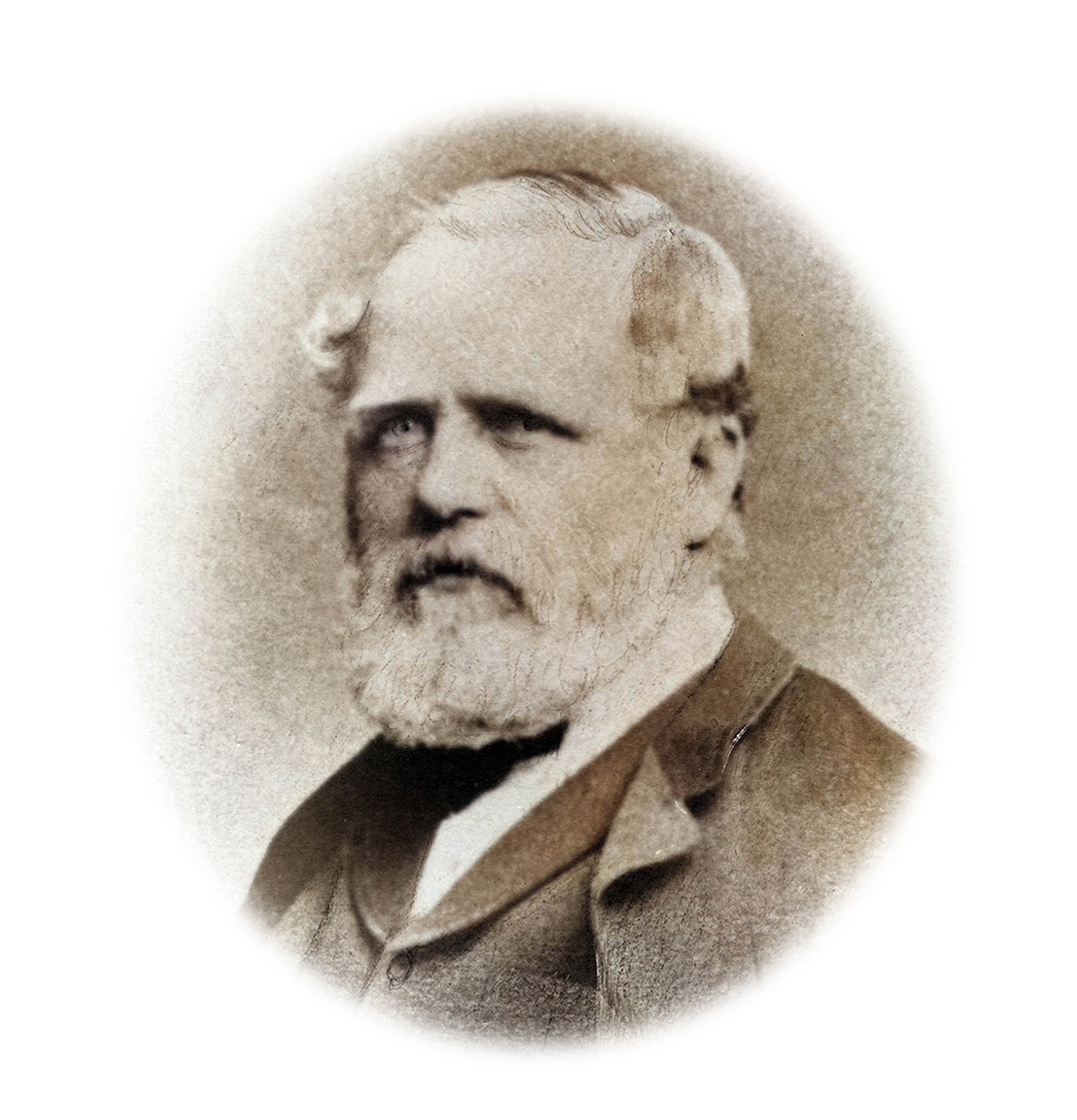
The Norfolk was a popular ship and large numbers of spectators crowded the pier to see her departure, giving three cheers as she moved away. Captain Tonkin also appears to have been a popular captain. In 1868 the saloon passengers gave him a photographic portrait of himself in colour while on a previous crossing he had been presented with an inscribed silver tankard.*
The inscription on the tankard reads:
Presented to Captain B. Tonkin on the homeward voyage of the ship Norfolk by his Passengers – 18 Dec. 1863
Captain Bryant Tonkin’s final voyage as ship’s master appears to have been in 1870 when The Norfolk passed through Port Phillip Heads on 22 May. and sailed for London.
Changing direction
The following year he was aboard The Suffolk, this time as a passenger accompanied by his wife, Mary Jane, and their teenage son, Bryant Jnr, bound for Melbourne. Mary was four years younger than her husband and the couple had been married in the early 1850s. Their only son was born in 1854 at Penzance.
Tonkin became a landowner on the Mornington Peninsula, selecting approximately 420 acres in the Balnarring Parish. It was gently rising hill country towards Red Hill and he chose a hillcrest overlooking Western Port Bay and the Southern Ocean on which to build his homestead. They named it ‘Tolcarne’, a Cornish place name that meant ‘hill brow tor’. Tonkin’s decision to take up cattle breeding was possibly influenced by James Teasdale and John Benn. They were both owners of coastal properties in the Parish where they were experimenting with the breeding of Shorthorn cattle.
Shorthorn cattle
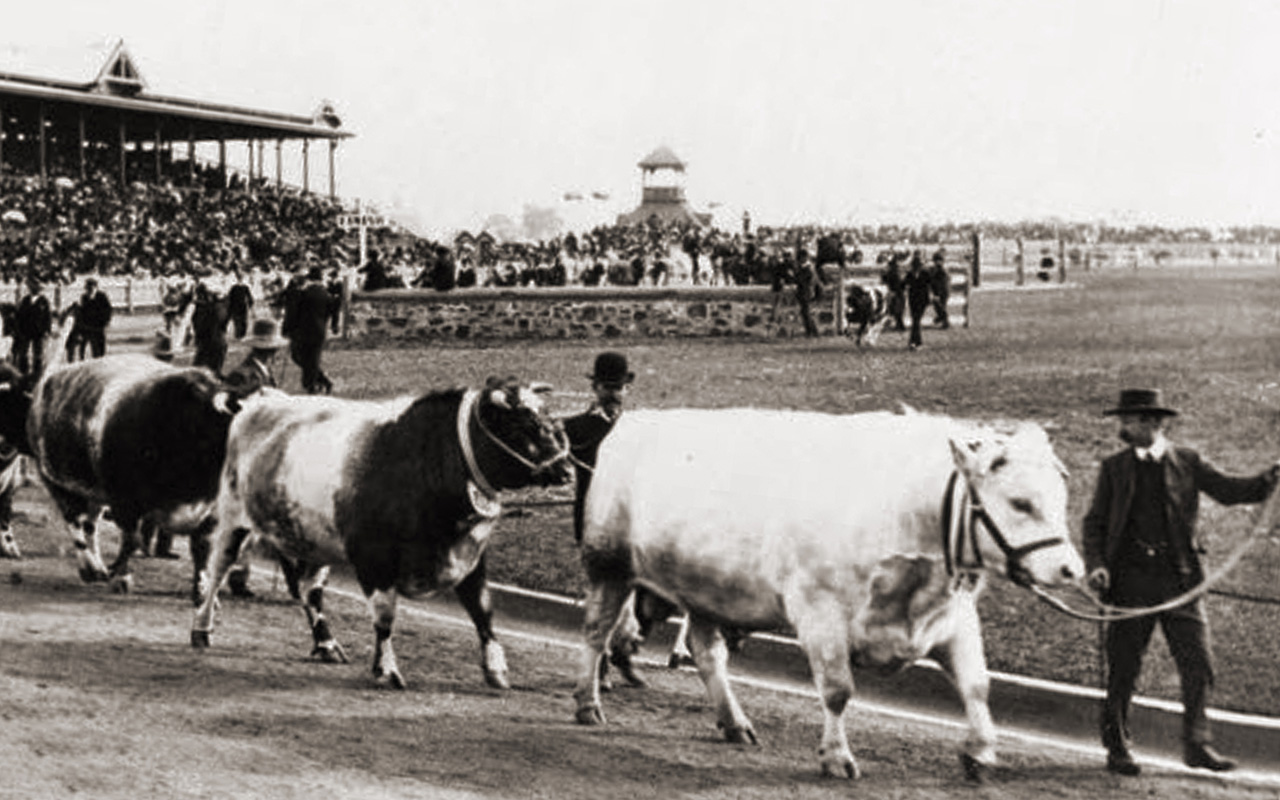
Shorthorn cattle had been introduced to Australia in the 1800s and had proved to be highly adaptable to Australian conditions. They produced both meat and milk and, as such, were favoured by cattle men who saw their potential and proceeded to build up their herds by importing good stock from the U.K.
It was said Tonkin had become captivated by the cattle under his care aboard the ship. In 1871 Tonkin imported three animals from the herds of William Nosken & Son of Hayle, Cornwall: two bulls and a heifer. One of the bulls was intended for sale but the other two animals were to form the nucleus of his own herd.
Their early years at ‘Tolcarne’, as for all the pioneers, were years of hard slog as land was cleared, fences built and a home put up. ‘Tolcarne’ was accessed from the main track which would become Stanley’s Road.
It was a rough track that linked to Dromana and to Hastings, and in 1875 Tonkin had written a letter to The Leader protesting about gates and other obstructions placed across government roads. A decade later there wasn’t much improvement: “…neither the road to Hastings nor the Dromana one being at all times fit to travel on”. (The Leader 17 March, 1883)
By 1878 Tonkin was a well-established cattle breeder and, along with James Teasdale of ‘Western Park’ and John Benn of ‘Coolart’, was considered one of the three main Shorthorn breeders in Victoria. His cattle were taking prizes at shows and sales and it was noted that ‘progeny from his bull, Penmur, had taken more prizes than any other sire in the colony’.
By 1881 the demand for Shorthorn cattle was high and so were prices.
In 1882 the Captain purchased a ‘mowing machine’ which was the wonder of the neighbourhood. It was loaned to neighbour, John Oswin, during harvest time but, as Georgina Oswin wrote in her diary, “the mechine [sic] broke, Twice.” Tonkin took it to be mended. It came back and was again put to use but broke down again. Oswin finished the job using the time-honoured scythe.
It was in 1882 that Bryant Tonkin ran for the Flinders Shire council and was elected. His son Bryant, now 28 years of age, married Mary Alice Smith, the eldest daughter of Captain John Smith, also a sea captain and a ship-owner. The Smith family became neighbours when they moved to a property on the corner of Stanley’s Road and Merricks Road. The younger Tonkin couple came to live at ‘Tolcarne.’
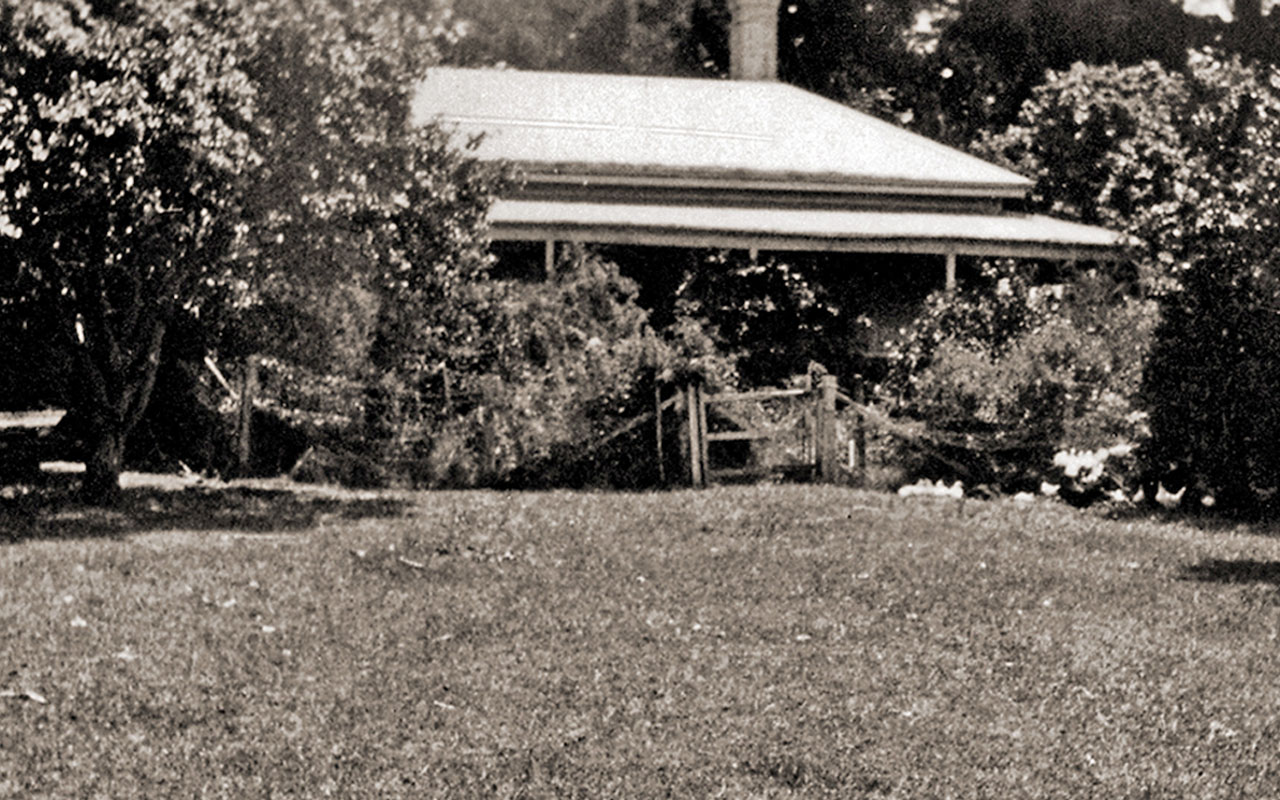
Tolcarne
The agricultural reporter for the Melbourne Leader described ‘Tolcarne’ in 1883 as: “ . . . a property of 420 acres . . . subdivided into paddocks of a convenient size, all the timber being rung (ringbarked). About 60 acres are cleared and divided into paddocks from 9 to 20 acres which are either sown down with English grasses or used for growing hay or green crops for home consumption”. The soil is “chocolate but becoming dry in summer” and the reporter describes Tonkin’s method of sowing mangels, then peas or barley and root crops to follow maize. The barley was for horse and cattle feeding while peas were used to feed poultry and pigs. In 1883 Georgina Oswin mentioned in her diary that the Captain had come and purchased two of their pigs, paying ten shillings for each. Captain Tonkin also fattened about 150 wethers at ‘Tolcarne’ but in 1883 had crossbred ewes for breeding using Lincoln rams. Rape was being grown as winter feed for the sheep. The barn, cowsheds, stables and yards were all ‘commodious and handy’.
It would appear that Captain Tonkin took his son into partnership as cattle sales now appear under the name Captain Tonkin & Son. However, over time, ‘Tolcarne’ was not as prosperous a property as hoped. Harry Peck, the cattle auctioneer, wrote in his memoirs: ”In those days the benefits of top dressing of pastures were not known on the Peninsula and the fine old gentleman [Tonkin] had not the best of luck.”
Major setbacks
Devastating bushfires swept the peninsula in the summer of 1898. The Captain and his wife, now in their 70’s, were at home alone when the fire threatened their property and they fought it together. The Mornington Standard reported it as a “remarkable escape’”. There were no trees close to the house but “several inches of grass right up to the dwelling”. “Armed with wet-bags the aged couple beat out the fire” a feat that was “nothing short of a miracle. All the buildings were saved but they lost £100 worth of fencing”.
Fires again swept the area in February 1901. The Tonkin property burned again. Georgina Oswin wrote of it in her diary. “. . . everything burnt black up there except the buildings. . . . The wind changed about 5. They had a terrible time with the fire, saving the [hay]stack then the fire got away across the paddock. . .”
The two fires, so close together, were a major setback for the family. In 1902 part of the Tonkin property was being leased by W. Todd who was running sheep. Some acres were devoted to oats and a few to rape.
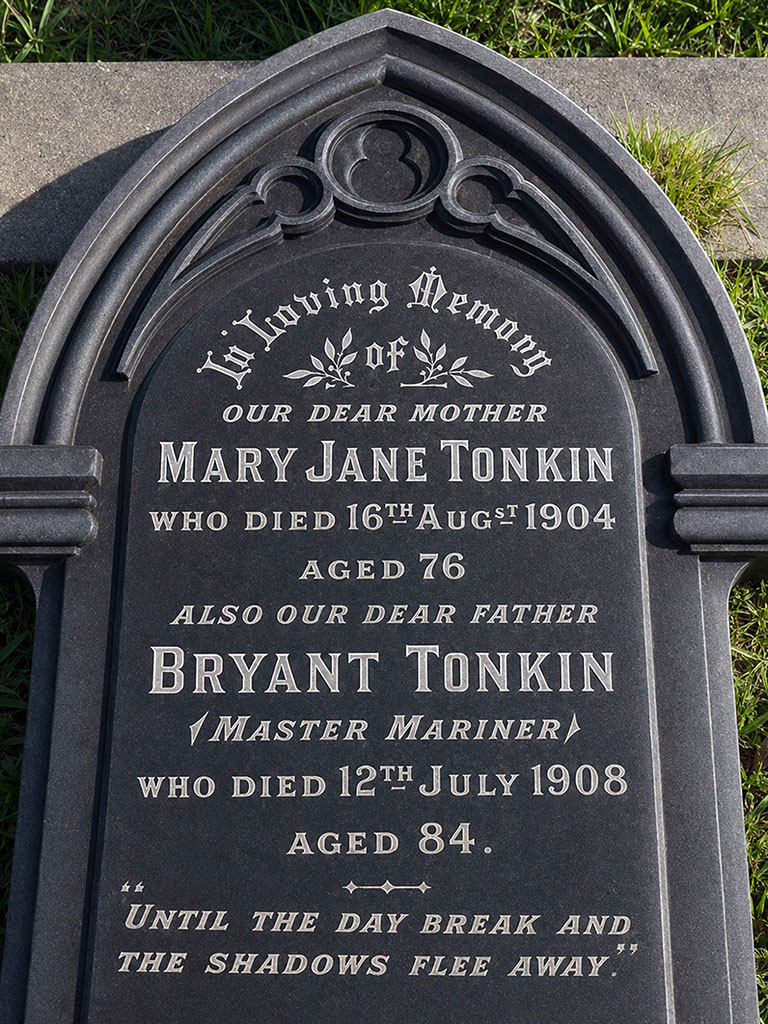
Mary Tonkin, the Captain’s wife, a quiet retiring woman, died on 16th August, 1904. She was 76 and her death was not unexpected as she had been “failing for some time”. (Mornington Standard). She was buried at the Flinders cemetery. Her husband died four years later, on the afternoon of 12th July 1908. He was 84 years old. Captain Bryant Tonkin was also buried at Flinders.
The next generation
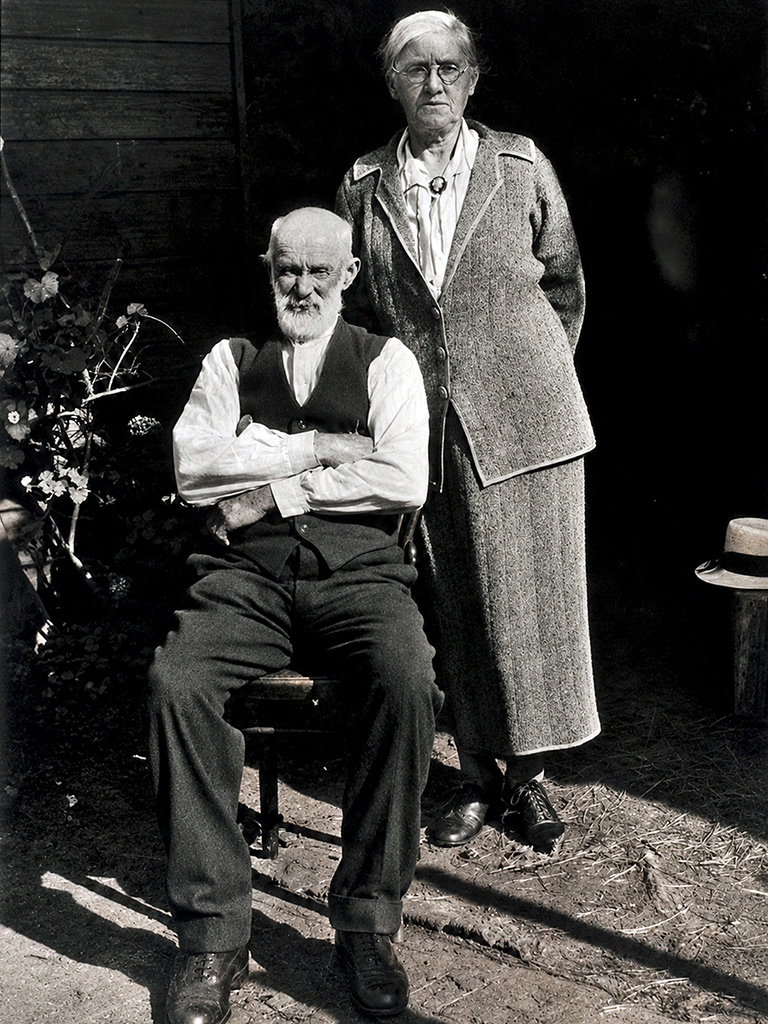
‘Tolcarne’ remained the home of the captain’s son, Bryant (known to his neighbours as ‘Bry’) and his wife, Mary Alice for two more decades. In 1925 the Tonkins let a room in their house to Annie and Arthur Lewis a young couple who had just moved into the district. Annie, a keen chronicler, took a photograph of the house and also one of the Tonkins. In her photo album she wrote the following captions under the corresponding images, “The house where we were staying while in Merricks. Situated on top of a hill and from there we had a splendid view of the surrounding country and Bay” and “Captain and Mrs Tonkin”. ‘Tolcarne’ was probably still referred to as ‘Captain Tonkin’s place’ and Annie, a newcomer, has muddled father and son. Bryant continued on the land until he was in his mid-seventies. Then he and Mary Alice sold up in Merricks and purchased a home in Glebe Street, Cheltenham. The couple celebrated their golden wedding anniversary there in August, 1932. Two months later, on October 20th Bryant Tonkin passed away at his Glebe Street home. Mary Alice died at a private hospital in Brighton in 1949. The couple had no children
References: contemporary newspaper articles; The Oswin Diaries, Robert Buntine. Photos: from the BDHS collection and the internet