
By Lisa Bayley – Somerville, Tyabb and District Heritage Society
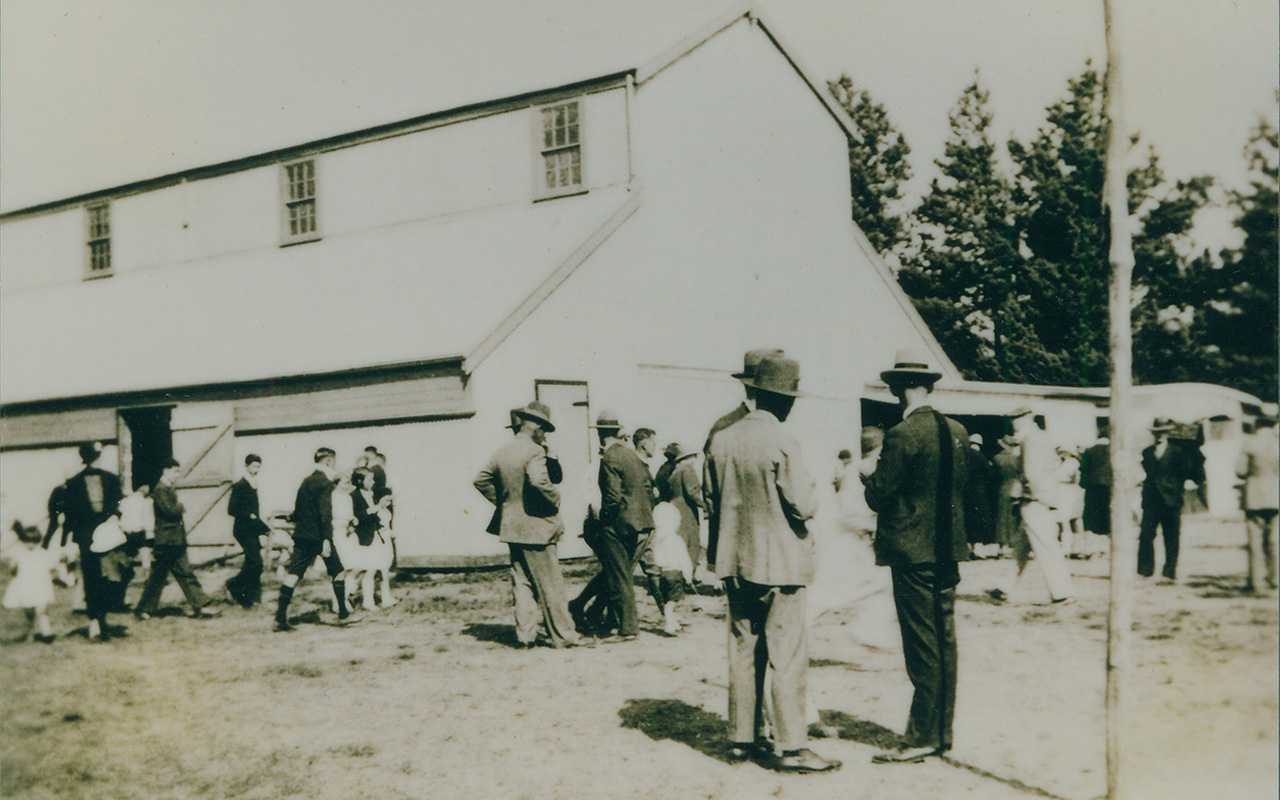
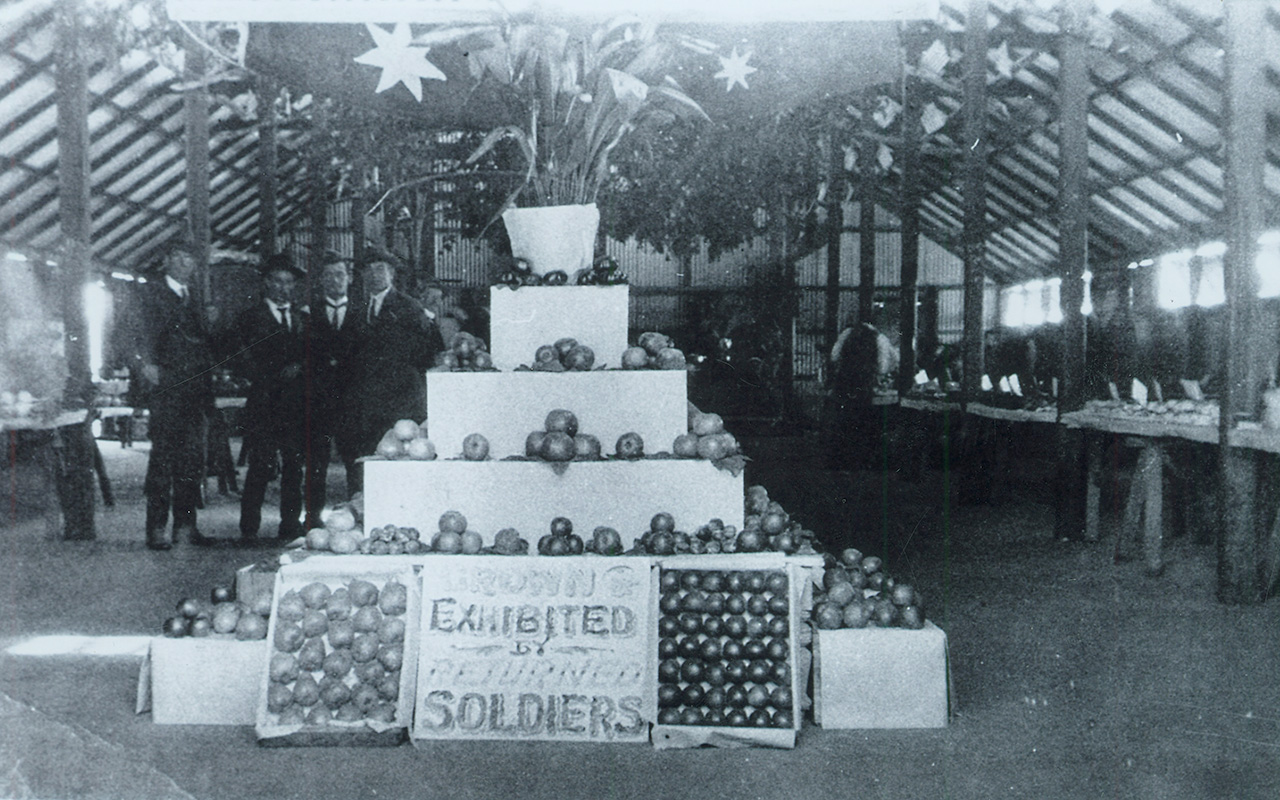
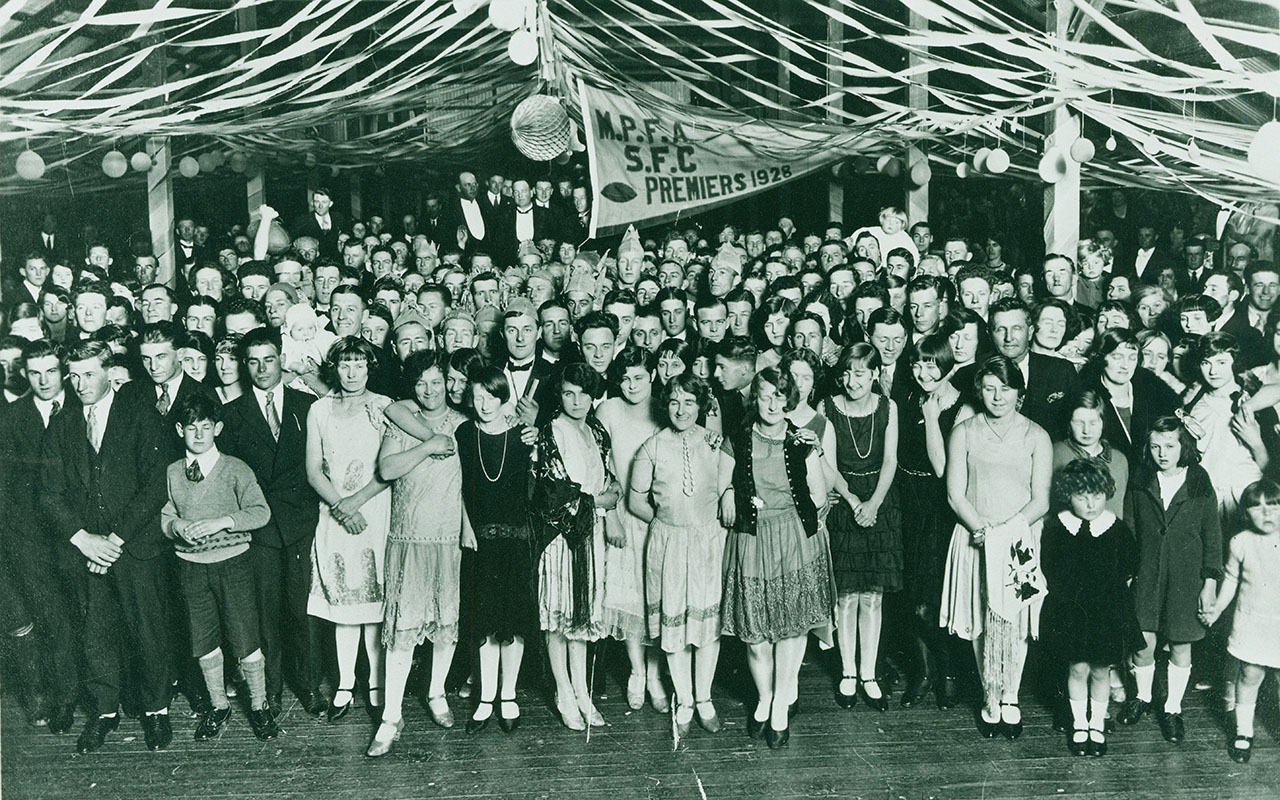
From 1914 until 1944, Somerville had a huge hall, reputed to be the largest on the Mornington Peninsula when it was built. It stood approximately where the Machinery Museum and Soldiers’ Memorial stand today in the Fruit Growers Reserve. Officially known as the Horticultural Hall, it was also referred to as the Fruit Growers Hall or Show Shed, though locals simply called it the “Big Hall.” Built primarily to house exhibits for the Somerville Show, it quickly became much more. Over the next thirty years it served as a roller-skating rink, dance hall and gathering place for celebrations and community events.
The Rise of the Somerville Show
Somerville hosted its first horticultural show in 1895. The show was organised by the Somerville Fruit Growers Association, formed in 1892 as the district’s orchard industry flourished. Through the Association, growers could exchange knowledge, improve growing and packing methods, promote Somerville fruit and advocate for better facilities.
The show quickly grew to become reputedly the largest horticultural show in the Southern Hemisphere, cementing Somerville’s place in the apple-and pear-growing world.
The show had always been held on what would become the Fruit Growers Reserve, but the land had previously been leased. In May 1912, the Somerville Fruit Growers Association had the opportunity to purchase the site for £400. At the same meeting in which the purchase was approved, the Association also decided to erect a large exhibition shed on the land.
Building the Big Hall
Measuring 100 feet by 50 feet, the Hall was built by local builder Ralph Philbrick, who was also responsible for laying the floor, reportedly made from jarrah. The walls were clad in galvanised iron, with a timber internal structure.
By August 1914, the hall had been fitted with an “up-to-date” lighting system. Twenty-four jets of acetylene gas illuminated the building, producing what was described as “a splendid light” and making it far more suitable for evening events.
The money needed to purchase the reserve and construct the new hall was raised with strong support from the Fruit Growers Ladies’ Guild, whose members organised bazaars, fêtes and social functions to help pay for the building and grounds. However, the hall had only recently been completed when the First World War began, and the Guild’s fundraising efforts were quickly redirected. In a patriotic response, the Guild disbanded and reformed as the Somerville Red Cross, before returning to local fundraising after the war.
Two Halls, Two Different Roles
Although the Big Hall provided a large open space for exhibitions, skating, dances and gatherings, it was uninsulated and unheated.
The nearby Mechanics’ Institute Hall served a different purpose. At some events, activities took place in the Big Hall while food was prepared and meals were served in the Mechanics’ Hall, which was better suited to cooking and dining.
The two buildings therefore served complementary roles in Somerville’s community life.
Roller-Skating and Entertainment
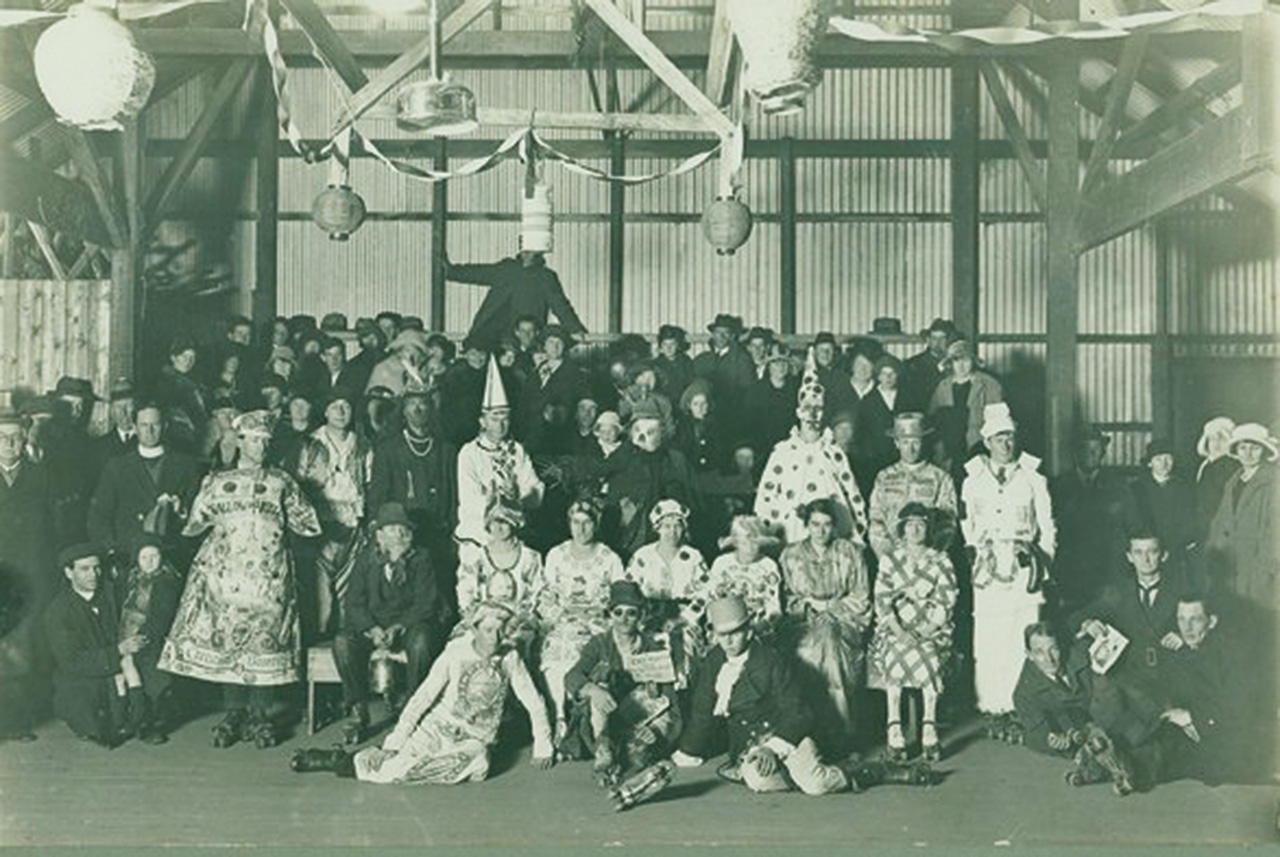
The first amusement held in the new hall was a roller-skating evening on 15 June 1914, only a short time after it opened.
Skaters could bring their own skates or hire a pair from Arthur Unthank, a local orchardist who organised and hosted the evenings. Roller skates of the period were generally metal, with four small wheels and leather straps fastened over ordinary shoes.
Roller-skating became a regular part of life at the hall, alongside dances, celebrations and other community gatherings.
The Last Somerville Show
The annual Somerville Show continued until 1939. With the outbreak of the Second World War, the Show committee deliberately decided not to continue holding the event whilst Australia was at war.
Although the Big Hall remained in community use, the 1939 show proved to be the last, ending a tradition that had begun more than forty years earlier.
The Fire of 1944
The Big Hall remained a landmark of the Fruit Growers Reserve until 8 March 1944, when a major fire swept through Somerville and the surrounding district.
The fire broke out at around 1.30pm behind a shop in Station Street, approximately where the Indian restaurant stands today, before spreading rapidly through nearby outbuildings and dry grass. The flames soon reached the showgrounds, where the Horticultural Hall was lost.
Several fires had broken out across the district that day, and when the Somerville fire began the local brigade was already attending a fire at Bittern. It was reported that more than 1,000 people were ultimately involved in fighting the blaze, including 250 sailors from Flinders Naval Depot, servicemen from the Somers RAAF camp and Balcombe military camp, as well as local volunteers. Brigades from Hastings, Pearcedale, Baxter, Mornington and Frankston were also called out, joining the Somerville Brigade once it returned from Bittern.
Around 2,000 acres of grassland and some orchard country were burnt, together with miles of fencing, as the fire continued towards Tyabb and Hastings before finally being brought under control. Surprisingly, despite the scale of the fire, only one injury was reported: a member of the Air Force who was treated for burns to his arms.
The End of an Era
The destruction of the Big Hall brought an abrupt end to thirty years of community history. Built to showcase the fruit that had made Somerville famous, it had become a skating rink, dance hall, meeting place and centre for town celebrations.
Its loss was not simply the destruction of a building, but the loss of one of Somerville’s most important gathering places. However, with the Somerville Show no longer being held, there was little reason to replace it, and the Big Hall was never rebuilt.
There was, however, one small consolation. In April 1944, the damaged galvanised iron was auctioned with enthusiastic bidding, raising nearly £90 – proving that even after the Big Hall had burnt down, Somerville could still get some value out of it.