
By Lance Hodgins
It was a sunny January morning in 1927.
Fourteen-year-old Thomas Moseley was a keen bicycle rider and he left his parents’ orchard in Mount Eliza to ride the three miles into Frankston where he would meet up with his great mate, Leo Claxton, for lunch.
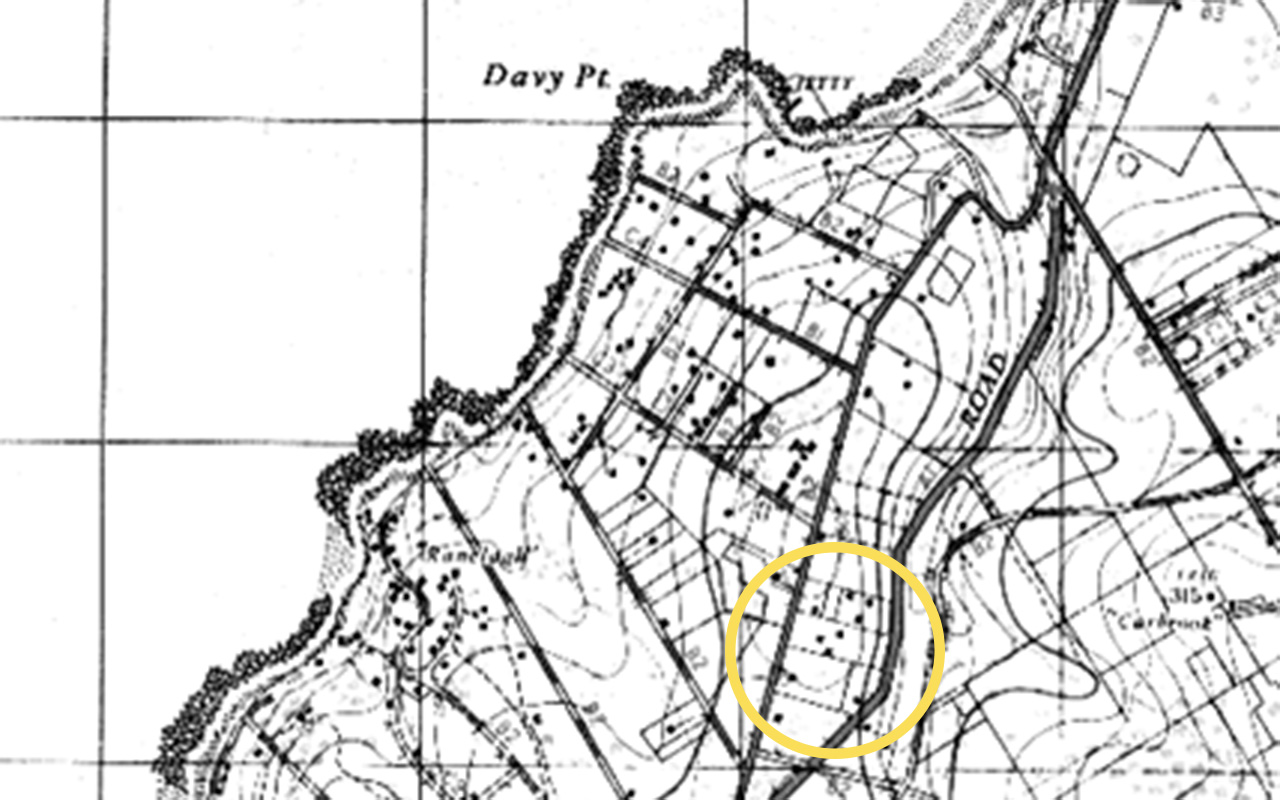
It was an easier ride now that the new deviation in Point Nepean Road bypassed the treacherous Devil’s Elbow – a hook-shaped corner and narrow bridge where the road crossed the Kackeraboite Creek. The Mount Eliza store was now a quarter mile behind him and he had just passed Glenormiston, the newly-built home of the Prime Minister, S M Bruce, when he stopped for a brief rest. And then he saw it… only a few feet away was a woman’s leg sticking out of the bracken on the side of the road.
Thomas immediately raced home to tell his parents of his discovery but, under their questioning, he wavered in his certainty as to what he had seen. They advised him to ride back and make sure. He rode back into Frankston instead and got his mate and the two boys returned to the scene. But the body had gone!
In the meantime, Henry McNamara, a 20-year-old driver for Crean’s Bakery in Frankston was delivering bread along the new deviation. He had just delivered a loaf and had one foot on the cart as he urged his horse up the hill. A motor bus came in the opposite direction and he pulled over to the side of the road to let it pass, watching that his wheel did not go into the drain.
At a disused gate leading into a paddock he saw a woman’s leg – apparently resting in the shade and reading – so he drove on. As he did, he wondered whether the woman might be suffering from sunstroke, or an illness, so he turned around and went back for a closer look. It was a body.
McNamara hurried to the Mount Eliza post office where he rang the police. Constable Gale attended promptly and found the body of a young woman about nine yards from the road lying on her back, partly covered with bracken.
The head was lying in a hollow in a group of five young gum saplings; the right hand lay across the breast and the left arm was outflung. The right leg, partly raised, was resting against the post of the disused gate and the left leg was slightly doubled up. The clothing was disarranged, as though the body had been dragged from the road. A black fine straw hat was pulled well down on the head.
Constable Gale had the body taken to Frankston. He at once realised that the circumstances suggested murder so Senior Detective McKerral and Detective O’Keefe of the Criminal Investigation Branch were called in. They made an exhaustive search of the locality but found nothing, and had the body removed to the city morgue.
A subsequent post mortem examination revealed that the girl had not died from septicaemia, as at first suspected, but from an internal rupture caused by criminal interference. It appeared that death had taken place on Tuesday and the hot sun on the following day had decomposed the remains – which explained why the detectives thought it had been there for several days.
Inquiries at the local garages were fruitless and a search of missing persons yielded nothing. The description they issued was as follows: twenty-five years of age, height five feet five inches, well built, inclined to be stout, auburn bobbed hair, round full face, thick lips. The body was dressed in a cotton singlet, lace brassiere, white silk undershirt with half inch lace frill, white knee-length silk dress with a belt of the same material tied in a bow, flesh coloured silk stockings and black satin shoes. The shoes were size 5 and were branded “Bureau Bootery, York House, 294 Little Collins Street.”
On the little finger of the right hand was a heart-shaped signet ring inscribed “From L to E.” On the left arm, below the elbow was a “Nellie Stewart” bangle, bearing on the inside the jeweller’s mark “9ct, sil. lined” and initials which appear to be “G.H.” This style of gold bangle was popular in Australia at that time as a sign of romantic attachment, worn by stage star “Our Nell” who carried one from her lover for forty years.
The dead woman’s clothing and general appearance suggested that she belonged to the better class. She had been expertly manicured and her shoes were of good quality and almost new.
There were no marks of violence on the body, which was that of a well-nourished, well-cared-for young woman. There were indications that at least her stockings and shoes had been put on after she died and that death was due to medical malpractice.
The body had obviously been brought from the city by motor car and dumped on the side of the road with little attempt to hide it. With a little more effort, it could have been carried a few yards further into the bush to the banks of a creek – where it might have escaped discovery for months.
A lone sighting on the Wednesday night came from a university student. He had seen a car travelling slowly near the spot where the body was found, and then swiftly drive away.
“Miss Clarke is ill and she won’t be in to work today.”
The following morning a young man called at the office of detectives McKerral and O’Keefe. He told them that the published description matched that of his sister, 25-year-old Eileen Clarke.
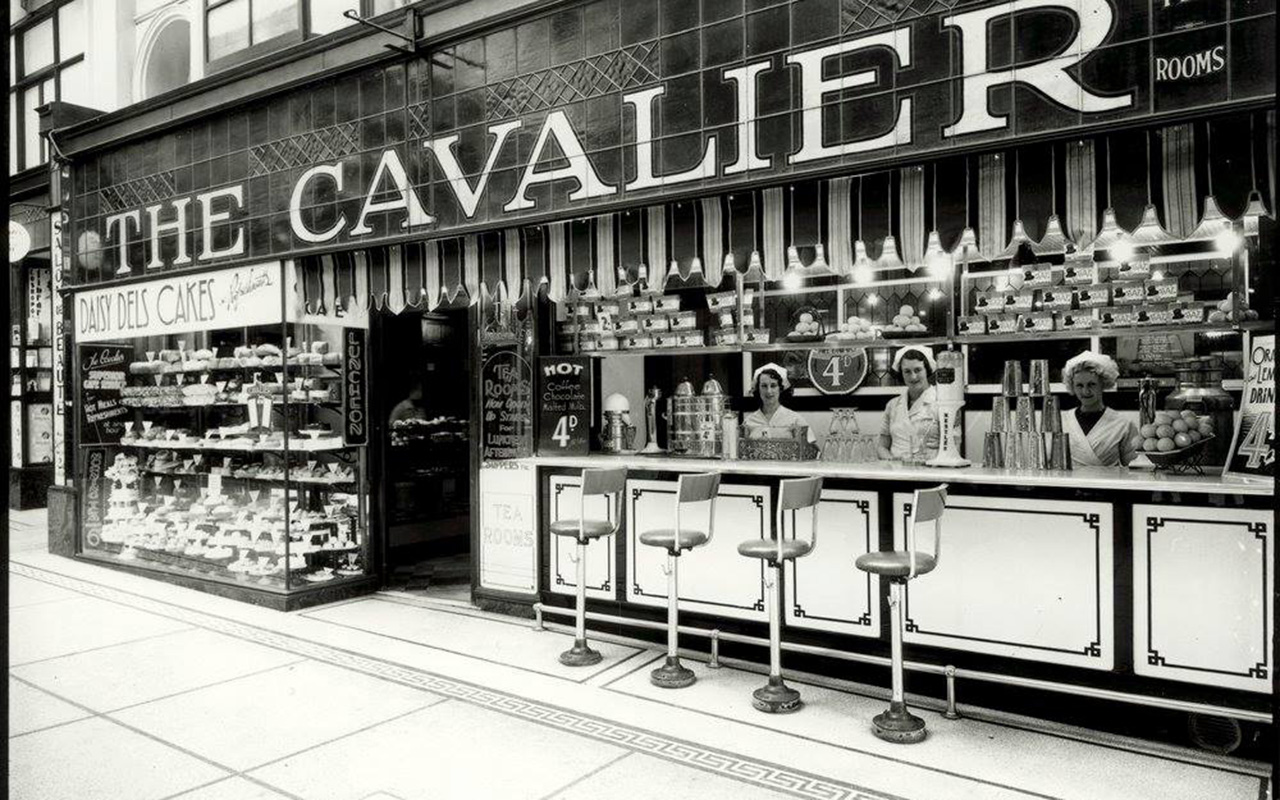
Eileen came from Geelong where she had lived with her mother, Maud, and worked in a Moorabool Street café as a waitress. For the past three years she had been employed at the Cavalier Café in Swanston Street. She had lived first in South Yarra and for the past twelve months had taken a room at Dundas Place, Albert Park.
Miss Clarke was very popular at the Cavalier, where she had recently been put in charge of the Queen’s Walk section. Her workmates said that she was a happy girl and popular with them all. She had formed a deep attachment with a man from the country, someone she had known in Geelong, but he had not been seen recently at the café. It seemed that another had won her affections – a well-known man about town who was frequently in her company.
Eileen had been at work until 6pm on Tuesday. She left the shop with a borrowed suitcase saying that she was going to spend the night with a friend.
At midday on the Wednesday one of the waitresses at the Cavalier received a telephone message that Miss Clarke was ill and would not be coming in. She thought little more about it, but the detectives had other ideas – whoever left the message knew that Eileen was dead at that time.
The detectives visited her lodgings in Albert Park where little was known about her as she took her meals elsewhere. She had not been back to her room since she left for work on the Tuesday. The police took possession of her things which included certain items of clothing and correspondence.
A nurse with a history
Less than a week after the discovery of Eileen Clarke’s body in Mount Eliza, a man was questioned about aspects of his relationship with Miss Clarke. He admitted that he had taken her out several times but nothing could be elicited to connect him with the events which led up to her death. He was asked to wait in the office.
Later that afternoon, detectives visited a house in Charles St Abbotsford which operated as a “private hospital” and brought in a nurse to Russell Street for questioning. She denied all knowledge of the deceased. Three hours later, an employee at the hospital was brought in and they were both confronted with the man who had spent the day at the detective office.
Shortly afterwards, 43-year-old Verose Eujenie Chamberlain was charged with having murdered Eileen Clarke on or about January 12 at Abbotsford. Chamberlain argued that she was a registered midwife with several patients who would need her, so bail was granted.
Chamberlain was well-known to police. She had been running her “hospital” in Abbotsford since the early 1920s.
In 1922 she had been found not guilty of using an instrument with wrongful intent on a young pregnant girl. She had been charged with murder twice, most recently in August last year over the death of 27-year-old Evelyn Roach. On each occasion the charge had been withdrawn.
“You dirty mongrel, Lyons!”
At the Inquest, a waitress at the Cavalier, Nellie Withers, testified that she had known Eileen for three months and that a male friend named Lyons had visited her at the cafe. At this stage the coroner called in a witness – a short, well-dressed man carrying a cream motor dust coat and wearing smoked spectacles. He had been standing in the vestibule with his dark tinted glasses and holding up the coat to his face in a manner which made him stand out among the small crowd of people there.
All eyes were on him as he entered the court. When he passed by the mother of the dead girl, she shouted at him, “You dirty mongrel, Lyons!” There were calls for silence and her husband and son managed to restrain the agitated woman from continuing her outrage.
The waitress then identified the man as a friend of Eileen’s. He would come in to buy cakes and bring fruit for Eileen, but rarely talked to her for long. During the time that Lyons was on the scene, however, she had never known Eileen to go out with another man.
The inquest then called on the man named Lyons who was sworn under the name of William Smith. He said he was a commission agent of Park St Brunswick and was the brother of Mannie Lyons, a big bookmaker in the racing world. He had known the deceased for about three months.
“On Monday January 10, I saw her on the corner of Swanston and Collins but had only a few words with her,” said Lyons. “She said she was going somewhere on the tram and showed me a business card, but I didn’t take much notice of it.”
The police prosecutor produced the card. The printing on the card read Nurse Chamberlain, Abbotsford, along with the telephone number J 2487.
When asked whose initials were on it Lyons said, “William Smith. I put them on.”
The coroner then began to address Lyons, who interrupted him to say that he had been promised he could testify under the name of William Smith. This was strongly opposed by the Coroner and the witness responded with, “My name then is not Lou Lyons – but Leslie Lyons.”
Lyons then continued his testimony. He had known Eileen since she lived in Darling Street, South Yarra, and she knew him as Leslie Lyons. He believed that she was of good character and he had not known her to go out with other men. He was in her South Yarra room only once or twice and denied having supper with her there. He refused the assertion that he was in the habit of visiting her about three times a week.
Lyons did admit to having given her a ring and, at her request, had arranged for the initials “From L to E” to be engraved on it.
The witness was then read a letter, written by him on November 29:
“Dear Biddy,
Just a line to tell you that I received your letter, and was very pleased to hear that you are quite well. Which leaves me the same. I was very sorry that you did not see Lawson. But we will leave it until you come back. I think I will go out and see a man about it tomorrow. We know his business. I will be at the club tomorrow all day, so you can ring up as I will not be going to the races. Have not much news to tell you at present. Must close my letter with much love from,
Yours truly, Lou.”
Lyons denied knowing anyone called Lawson and stated that the man he was “going to see tomorrow” was a Dr Allan of Collins St. He understood that Eileen had been suffering from kidney trouble and had been seeing a Footscray doctor, and he was just offering to help.
Eileen’s mother told the inquest that Eileen had visited her in Geelong on New Year’s Day and on the next day they had gone for a drive to Belgrave. They returned to her daughter’s place in Albert Park for about 20 minutes before going on to visit a relative in West Melbourne. On finding her not at home, Eileen took the train home as she had to get ready for work the next day.
Although she considered they were “pals”, Eileen had never said anything to her about being ill. She did, however, speak of her man friends: a beautiful Mr O’Brien – and another one called Lou Lyons.
After only an hour’s hearing, the coroner returned a finding that Eileen Clarke died from shock and haemorrhage of an internal organ following an illegal operation. There was no evidence, however, to show by whom or where the operation had been performed.
It was a sad-eyed Clarke family which left the court after the hearing.
Lyons again sought the protection of dustcoat and goggles and scurried off.
On the following day, Wednesday January 26, the charge of murder against Nurse Chamberlain was withdrawn.
Police frustrations
The Attorney General, F W Eggleston, immediately promised an amendment to the Crimes Act. Under section 62 of the Act, the offence of attempting malpractice was a felony with a maximum sentence of 15 years. But in criminal law, however, any person causing a death while committing a felony was deemed guilty of murder.
The Herald had urged that the law be changed and leading doctors and barristers lent their support. Under the existing regulations it was practically impossible to induce juries to regard such offences as murder, with the result that in the absence of an alternative charge – such as manslaughter – the accused were generally acquitted.
The inquest had been held soon after the finding of the body and there was widespread public comment that the police case had not been thoroughly prepared. The Police Commissioner (Mr T Blamey) took the unusual course of calling for a complete report of the results of the police investigation, both before and after the holding of the inquest.
The police were also frustrated by the Coroner’s verdict. An open finding was extremely rare when police already had someone in custody on a murder charge. Nonetheless, the Crown could still send that person for trial. It did appear that, in this case, the suspect was about the go free.
Peninsula Essence December 2024