
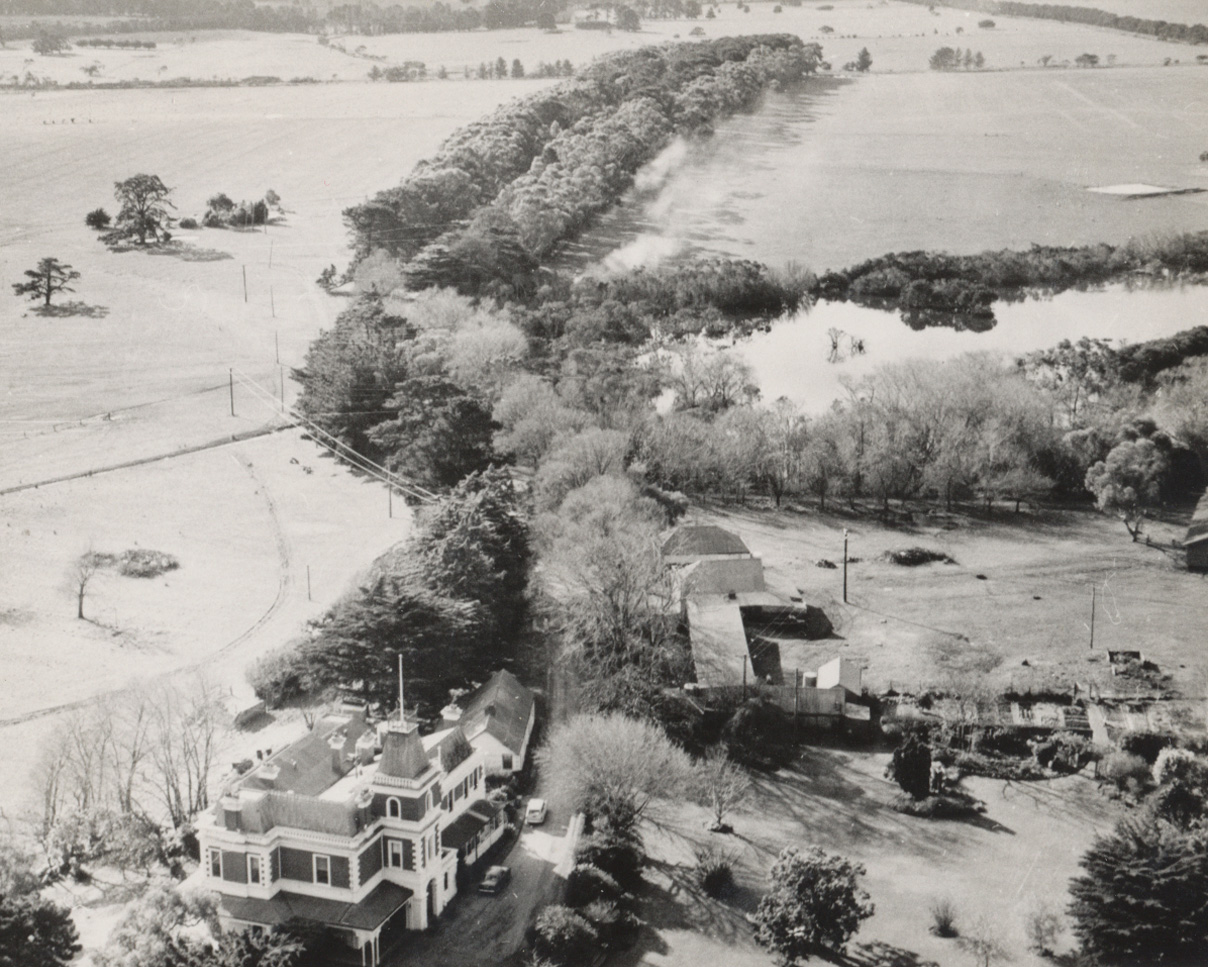
By Ilma Hackett – Balnarring and District Historical Society
When well-known businessman Thomas Luxton purchased ‘Coolart’ in 1937 it was the first step in realizing a dream. The property had been advertised as high class grazing and agricultural land but for him its principal attractions were the marshes and shallow lagoon with the abundance of bird life that they attracted. A keen naturalist and ardent bird watcher, he immediately had Coolart declared a wildlife sanctuary. By the time of his death in 1968 Tom Luxton had achieved his dream: Coolart had become a widely renowned, world class sanctuary for water birds.
McEwans, The Family Business
The hardware chain McEwans had been established by Luxton’s father, also named Thomas, who had bought two smaller hardware businesses, one in 1907 and the other in 1910 and had amalgamated them to form one company. Luxton Sr. was the chairman of this new company and his four sons were directors. After the death of the senior Luxton in 1911, the two younger sons, Tom and Harold, were left with the full responsibility for the management of the company. They built the business up to be a prosperous chain of hardware stores.
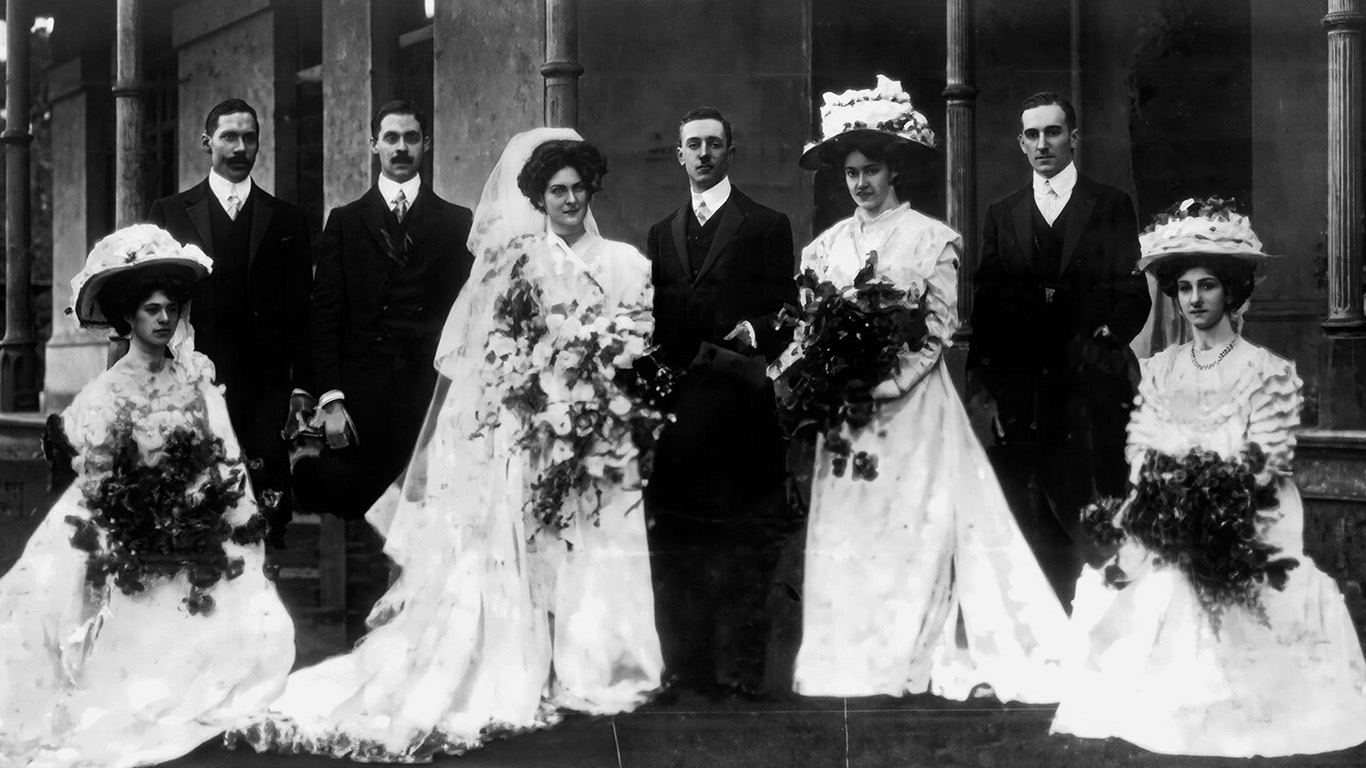
On August 1908 Tom married Gertrude Christian at St George’s Church in Malvern with a reception held in the grounds of ‘Myoora’, Hawthorn, the home of the bride. The wedding was covered in the social pages of Punch magazine, the write-up accompanied by photos of the bride and the bridal party. The couple made their home in Glenferrie where they raised three children: Elizabeth, Peter and Margaret.
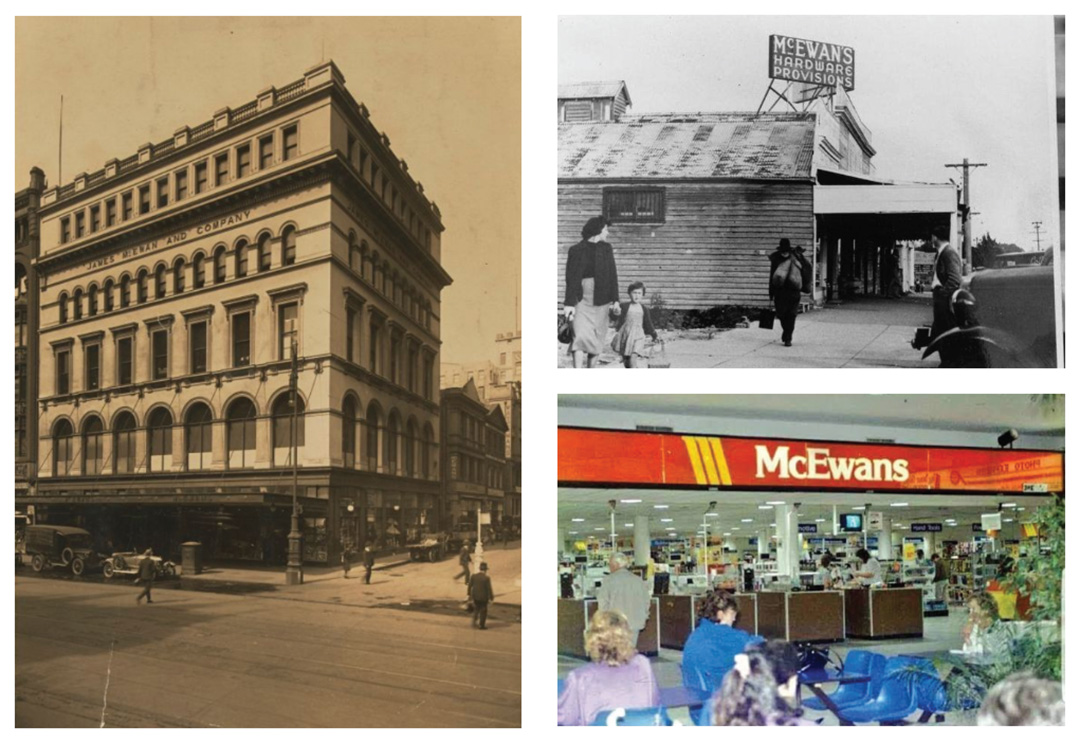
Top right: McEwans hardware store in Dandenong, circa 1950
Link with the Scouting Movement
Tom’s brother, Harold, like his father before him, was involved in local politics and in 1928 he became Melbourne’s youngest Lord Mayor. This coincided with the time that Lord Somers was the Governor of Victoria. During the late 1920s Lord Somers established a boys’ camp at Balnarring East (later Somers) on donated land at a corner of the property, Coolart. Both Luxton brothers, through their company, donated generously by supplying equipment for the camp and were guests at the camp’s official opening in 1931. That year the brothers were also to host Chief Scout, Lord Baden Powell and his wife when they visited Melbourne as part of a tour to Australia and New Zealand. The tour with its tight schedule (meeting scout groups and attending functions) was a wearying one for Lord Baden Powell, then in his mid-seventies. Over the Easter week Tom Luxton, who was at the time Treasurer of the Boy Scout Association, accompanied the Chief Scout to Tawonga in the Kiewa Valley. There they went fishing for trout in the Kiewa River. Baden Powell later said that during the trip Luxton had been “almost a mother to him”. A friendship developed and towards the end of 1934 into 1935 Baden Powell, his wife and two daughters were again in Victoria to attend a jamboree at Frankston. They stayed with the Luxton family at their beach house, ‘Tintagel’, in nearby Mt Eliza.
Coolart is proclaimed a Sanctuary
In September 1937 the 832 acre property Coolart changed hands for £13,518. It had been offered at auction a short time before but had been passed in. Now an offer was accepted and Tom Luxton became the new owner. Although he immediately had the property declared a wildlife sanctuary, Luxton also planned to continue using Coolart as a grazing property. He spent £1, 259 on livestock, purchasing 485 sheep for which he paid £1 a head as well as 86 bullocks at £9 each. He planned to run Coolart as a profitable working farm while realizing his vision of turning the lagoon and surrounding areas into a world-class sanctuary for water birds.
So began forty years of Luxton ownership of Coolart.
The Coolart mansion becomes home
Tom and Gertrude with two of their children moved into the impressive Victorian mansion in 1938. Eldest child, Elizabeth, had just married. Their youngest daughter, Margaret, was away at boarding school during the term but home for the holidays. The homestead, which had been built in 1896 by Frederick Sheppard Grimwade and had seen several owners over the space of time, needed work done to it. A first step was to paint the interior, a process that took months and initially involved having to strip back layer-upon-layer of wallpaper. It did have electricity which had been connected when the Lord Somers Camp, on the south-west corner of the property, had been built and electricity had been provided for that. The homestead was also linked to the telephone line. Coolart’s number was Balnarring 2. Calls went through the exchange in Balnarring and could be made from nine o’clock in the morning until noon on a weekday then from one o’clock in the afternoon until 5.00 p.m. At weekends the service was only during the morning on the Saturday; there were no Sunday calls. When the family moved in there were two toilets upstairs and the outdoor toilet with a cistern arrangement. They had another toilet installed indoors, a downstairs one. The old meat-house was still in use and periodically an animal was butchered for home consumption. Having electric power enabled Coolart to install a refrigerator and a freezer.
Gertrude turned her attention to the garden, transforming the rectangular Victorian-era garden designed for the Grimwade family into one that was more natural with a less formal layout. David Mattews was commissioned to design the new garden. Instead of the straight paths and rectangular flower beds the paths now wound around the lawns, arbours were created and stonework widely used. Native trees were planted as well as unusual exotic varieties. The rose garden in particular was Gertrude’s joy. Thirty varieties of roses had been planted and these gave a magnificent display of colour and perfume during the summer months.
At first Tom and Gertrude divided their time between Melbourne and Somers as Tom was still actively involved with his business. They drove to Melbourne on a Monday evening and came back to the peninsula on a Thursday or Friday. Tom usually drove himself but later he employed a person to act as both chauffeur and gardener. Their son, Peter, managed the property until he married and bought his own property near Warrnambool.
In the 1950s Luxton employed Ken Roberts as his farm manager. Known universally as Robbie, Ken, his wife Faye and their children moved into the manager’s cottage on Coolart and Robbie became Tom’s right-hand man about the estate.
The Lagoon
The small lagoon that was to become a focus for the bird sanctuary lay about midway between the house and the main gateway. Originally a shallow paperbark swamp fed by a natural spring, it was part of a drainage system that had a seasonal flow. During the previous century clay had been excavated from the site to make the bricks for some of the earliest buildings that still stand. Then, when the driveway was constructed this blocked the drainage, resulting in the water damming up in the old claypit depression to create a more permanent swampy area and a shallow lagoon. This wetland area was home to a variety of waterfowl: ducks and coots, swamp hens and the occasional ibis.
Nearby Tom erected a small bird hide, made from a packing case, from which he could observe the birds and contemplate more permanent plans for his sanctuary. In the early 1940s he rented out the small weatherboard house on the estate that stood along the drive between the homestead and the main gate, to the Francis family. Howard and Ronnie Francis were both local school teachers and they had two young sons. Howard, in particular shared, Tom’s enthusiasm for the wildlife on the property and the two spent many hours observing the birds, taking and comparing notes and ideas. Francis urged Luxton to “establish the environment and the birds will follow.” The two men remained friends after the Francis family moved from Coolart
The ibis stay to nest
During dry seasons, throughout the 1940s and 50s, when the water level was low Luxton worked on improving his lagoon. He raised the retaining wall along the drive and took the opportunity to excavate the bed of the lagoon, making it deeper and broader in extent. Mounds of earth were piled up to become islands when the lagoon filled again.
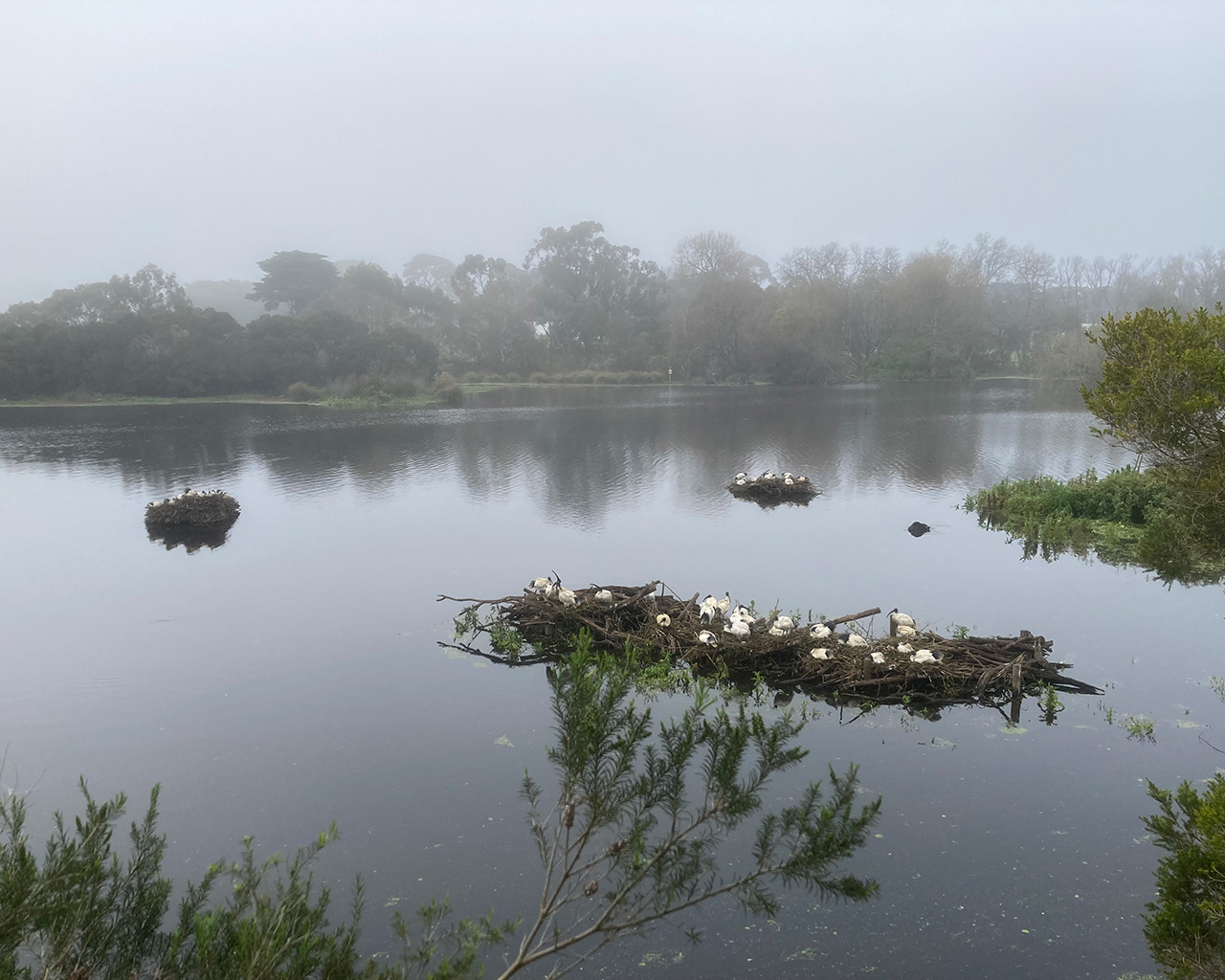
These islands were designed to become safe nesting and roosting areas for the birds, away from predators. Foxes, in particular, were an on-going concern. Trees were planted, willows and Louisiana swamp cypress, to landscape the area and thick stands of paperbarks would grow from the sprouted, broken roots of paperbark on the mounded islands. In 1961 six pairs of white (or ‘sacred’) ibis which had been rare in Victoria prior to World War 2, nested for the first time. Their numbers increased over the successive years until over 500 nesting ibis were being recorded each year. Straw necked-ibis were also attracted to the lagoon as were crakes, grebes, swans, spoonbills, cormorants and many other varieties of waterfowl.
The new bird-hide, named the Minsmere Hide after Minsmere Lake in the U.K., was built in 1961. When a second level was added, this gave an elevated view of the lagoon as well as an eye-level one. The hide was surrounded by scrubland, home to small birds such as blue wrens and wagtails and they could also be seen from the hide. Swallows took to building their nests inside the hide itself, high on the rafters close to the ceiling.
Working on the land
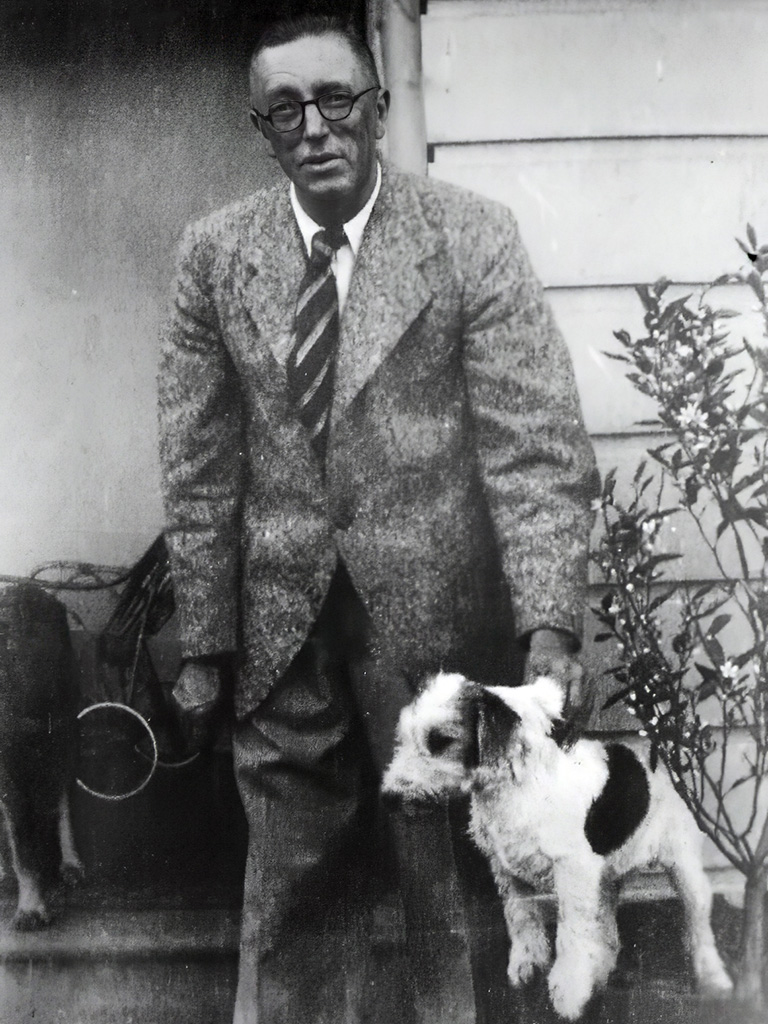
Luxton, described as a man of medium height who wore glasses and a had a ready smile, was happiest outdoors in gumboots and overalls working in his sanctuary and about the farm. He was a decisive man and had a ready wit. Robbie could only recall one occasion when he didn’t have a ready answer. One day on their rounds Tom and Robbie met up by the creek with the neighbour who owned the land on the opposite side of Balnarring Beach Road. Tom was lamenting the number of foxes that were about and accused his friend of sending his foxes onto Coolart land. Back came the neighbour’s retort, with a twinkle, that his “good Catholic foxes wouldn’t associate with [Tom’s] Protestant bastards.”
Farm life was busy year round. With 2000 breeding ewes on the property, lambing was an especially busy season. There were also the cattle and the poultry. Gertrude Luxton kept about 300 laying hens and sent the eggs for sale to Melbourne. The shearing shed had to be rebuilt about 1948 when fire destroyed the existing one. Tom added or replaced other farm buildings too, some of which dated back to the 1860s. The Air Force had requisitioned 50 acres of Coolart land along the coast for a basic training school for its recruits during the years of the second World War. When the war ended Tom bought back some of the land and he also bought one of the former accommodation huts to use as a shed. This has to be sawn into two to facilitate its transfer to its new site on the farm and then put back together.
Spreading word of the sanctuary
No matter how busy, Luxton still found time to work on his plans to encourage birdlife to his property. He invited the Victorian Ornithological Research group to conduct regular surveys and opened up his property to visiting groups of children. Pupils from the local Somers School had an annual excursion to Coolart and Luxton met the children personally. He was remembered as a “fastidious and well-organised host” who spoke of the history of the property and conducted a tour of the buildings. Then at the lagoon, after the teacher had spoken about the birds, Tom would speak of his plans and of his hope that Coolart would become “an important and appreciated sanctuary.”
When Tom Luxton died in 1968 he had achieved his dream; the Coolart sanctuary was widely renowned. Having taken aboard the advice to provide the habitat and the birds would follow, the lagoon and wetlands in time became home to many migratory birds that stopped there to rest or to breed. White ibis in particular returned yearly to nest.
The Victorian Government acquires Coolart
Youngest daughter, Margaret Roffey, with her husband John, continued to run Coolart as a grazing property for a number of years until the family decided to sell. In 1977 negotiations were conducted with the Victorian Government to buy the historic homestead and world-famous wetlands site, a total of 215 acres (eighty-seven hectares). The remainder of the estate was divided into approximately fifty acre lots and sold to private buyers.
In 1980 writer, photographer and ornithologist, Graham Pizzey became the first Warden at Coolart. Today, under the umbrella of Parks Victoria, the Luxton Lagoon and Wetlands is recognised as one of the most significant bird sanctuaries in the state and has, perhaps, the largest ibis rookery in the southern hemisphere.
Footnote:
The Coolart mansion, after having been closed for seven years, has recently re-opened its doors to visitors. The rooms downstairs will be open to the public every Wednesday and Saturday between the hours of 11 00am. and 3.00pm
Information:
Coolart, a Short History by John Webb; Bright-Eyed and Bushy Tailed by Bryan Francis; the Pastoral Review and Graziers’ Record Feb. 1908, p.28; Australian Dictionary of Biography, Balnarring Byways and Memories vol 4: ‘The Lagoon at Coolart” by Brian Thomas. Memories of Margaret Roffey, Ken, Robers, Peter Roffey
Peninsula Essence December 2026