
By Lance Hodgins
It was a typically cold, drizzling, dull and miserable July morning in Melbourne when they boarded the “Challenger”.
They were an odd collection – dressed too formally to be day-trippers, speaking in a polite and friendly manner tinged with an underlying air of solemnity. Many of them seemed to already know each other, as if related. Some wore returned service badges. A little Englishman seemed to be the centre of attention. There was a naval historian, a chaplain and a young bugler in uniform alongside two more casually dressed passengers – possibly divers.
They were obviously on a mission as they left Central Pier in their charter craft and headed down the Bay – their target a pin-point location off Frankston at exactly 2.05pm. On their arrival, a strange thing happened. The choppy seas became calm and the sun broke through a small opening in the clouds – an eerie phenomenon which was afterwards verified by those on board.
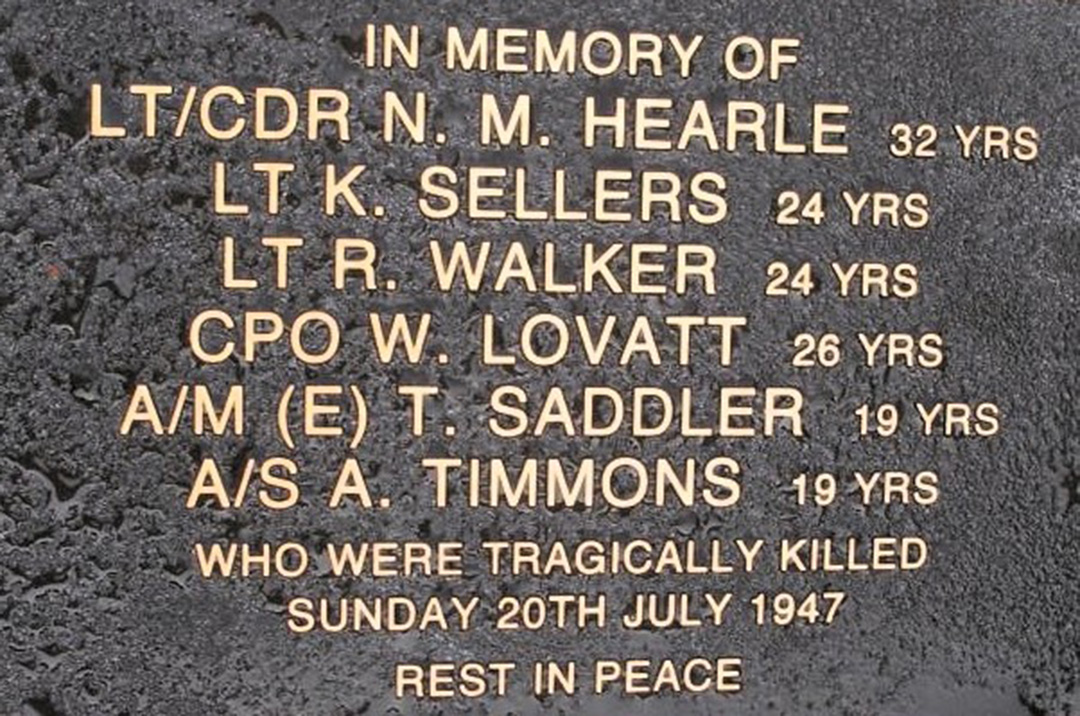
A solemn service was conducted by the chaplain and two wreaths were laid on the water. A bronze plaque with six names was taken down to the floor by the two divers on board.
The year was 2007. Three years earlier, those divers – Paul Roadknight and Steve Boneham – had made an amazing discovery. In twenty metres of water they found the remains of two aircraft which had collided and plunged into the Bay nearly sixty years before. To their horror, however, one pilot was still in his plane and the body of a second airman was found beside the wreckage of the other.
1947
This was an exciting time for Australians. The war was over and enlisted men were gradually being discharged back into civilian life. Prime Minister Ben Chifley and his government were embarking on an ambitious program of social reforms and nation-building schemes, including post-war immigration, the establishment of ASIO and the Australian National University, and the Snowy Mountains Scheme.
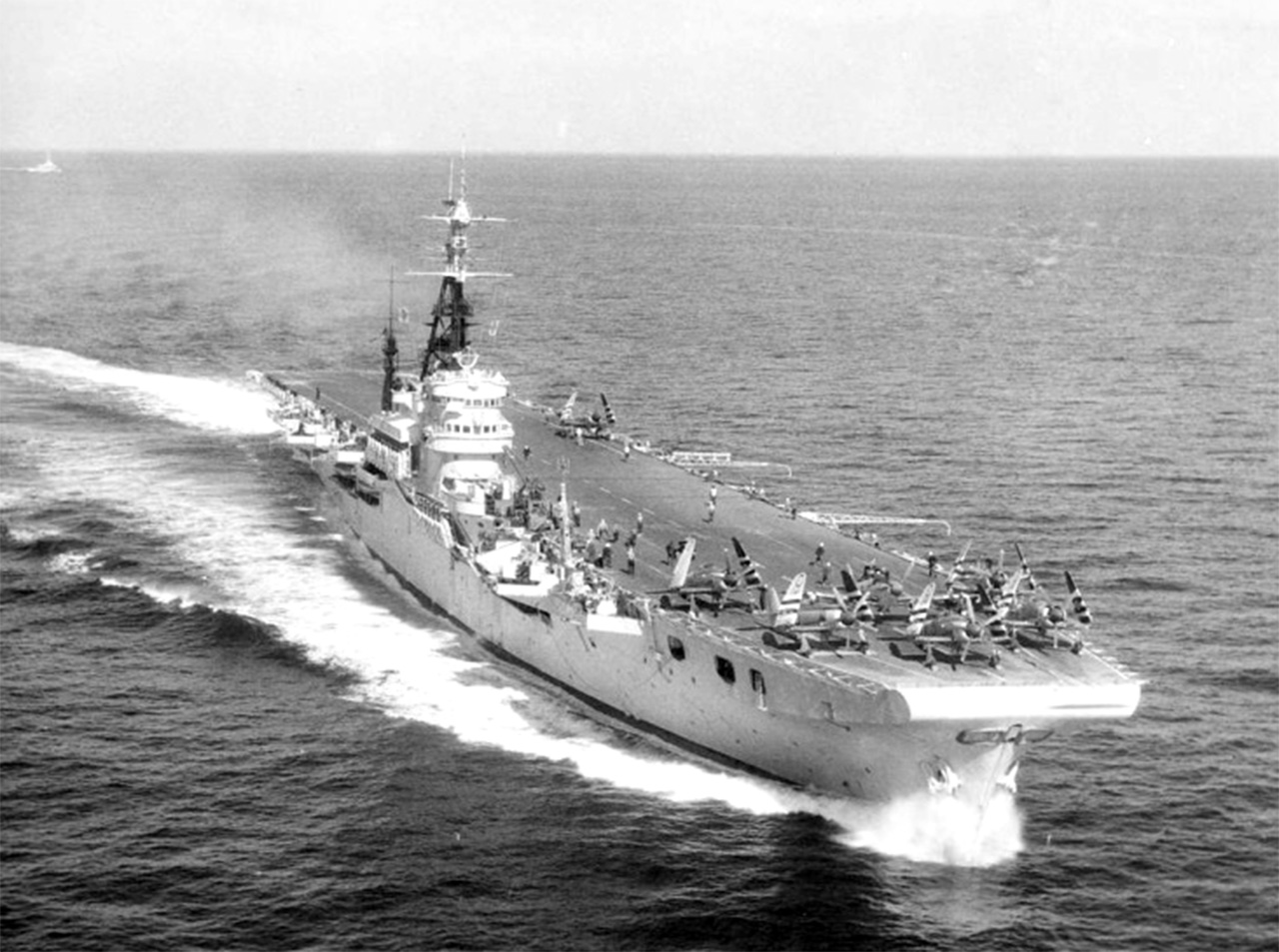
Australia had announced the purchase of two aircraft carriers from the British, equipped with the latest versions of the Hawker Sea Fury and the Fairey Firefly aircraft. To mark the occasion, two Royal Navy aircraft carriers and two destroyers embarked on a tour of the Far East which would include visits to Australia and New Zealand.
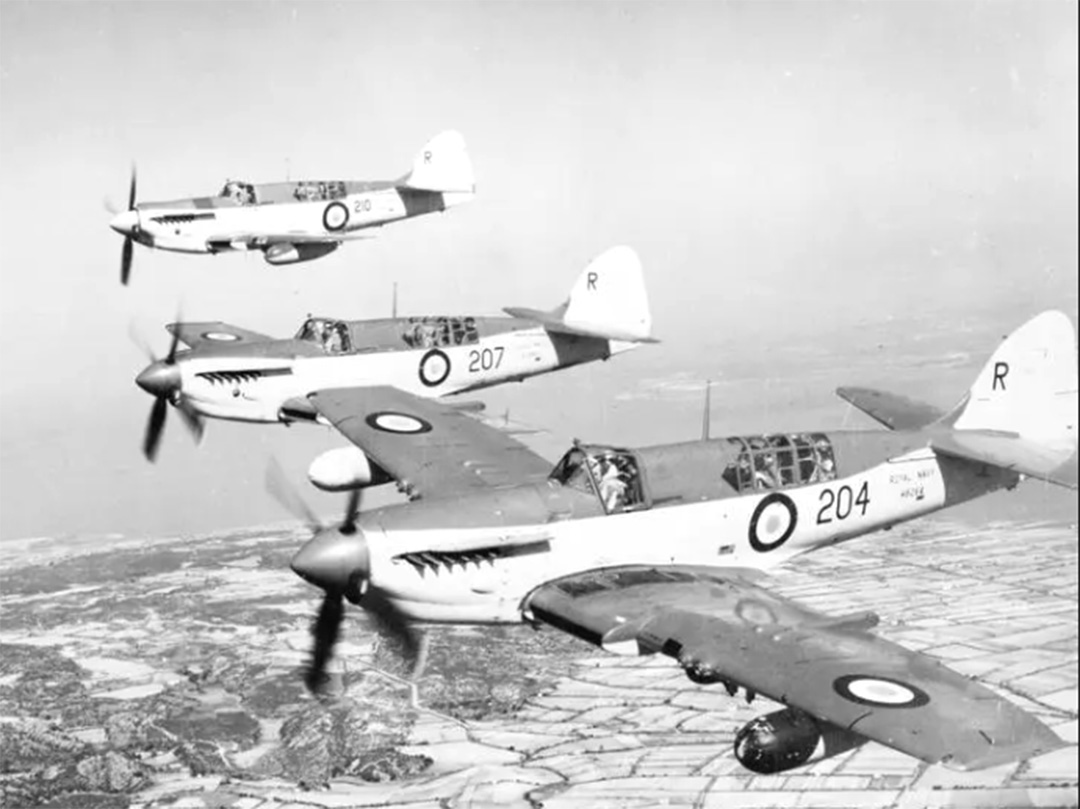
On Friday 11th July the carriers Theseus and Glory and destroyers Cockade and Contest entered Port Phillip Bay for a nine-day goodwill visit. Their arrival was announced with city fly-overs by their Fireflies – a versatile anti-submarine, reconnaissance and strike aircraft, with a crew of pilot and observer. They had taken part in WWII and would be used in the Korean War and by several navies, including Canada and Australia.
The Melbourne Welcome
Melbourne opened her hearts and doors to the Royal Navy as only Melbourne can. As 1,500 sailors filtered into the city, people shook them by the hands, took them for a drink, and invited them into their homes. There was a massive response from families offering beds for those on leave. The leave quota was swamped in a welter of public and private hospitality and hundreds of men were given overnight leave to stay at private homes.
The visitors were guests of the VRC at Flemington to witness the Grand National Steeplechase, officers attended the Red Cross Ball at the Town Hall and a dance at the Kooyong Tennis Club. Squadron members were invited to various Melbourne Clubs and made honorary members of golf and football clubs across the city. There were dozens of dances for ratings and day trips into the hills.
At the end of their nine-day stay, many young Englishmen were heard to express a desire to either transfer to the Royal Australian Navy or be on loan to our forces. Several marriages were even being planned!
Visitors to the aircraft carriers
Interest in these floating airfields was extremely high. Sunday 13th July was a Gala Open Day and 25,000 people visited the two carriers at Station Pier and learned about the operation of an aircraft carrier. Young boys climbed over the Seafire and Firefly planes and “manned” the anti-aircraft guns. It was difficult to shut down the visit at 5.30pm and hundreds were left waiting in queues to get on board.
On the Wednesday there were manoeuvres out on the bay and several VIPs and journalists were invited on board to witness the demonstration first-hand. They marvelled at the skill and bravery of the airmen – men who fly at 100mph and set down on an iron deck 80 feet wide and 650 feet long with the sea all around. “What nerve and faith!” they exclaimed.
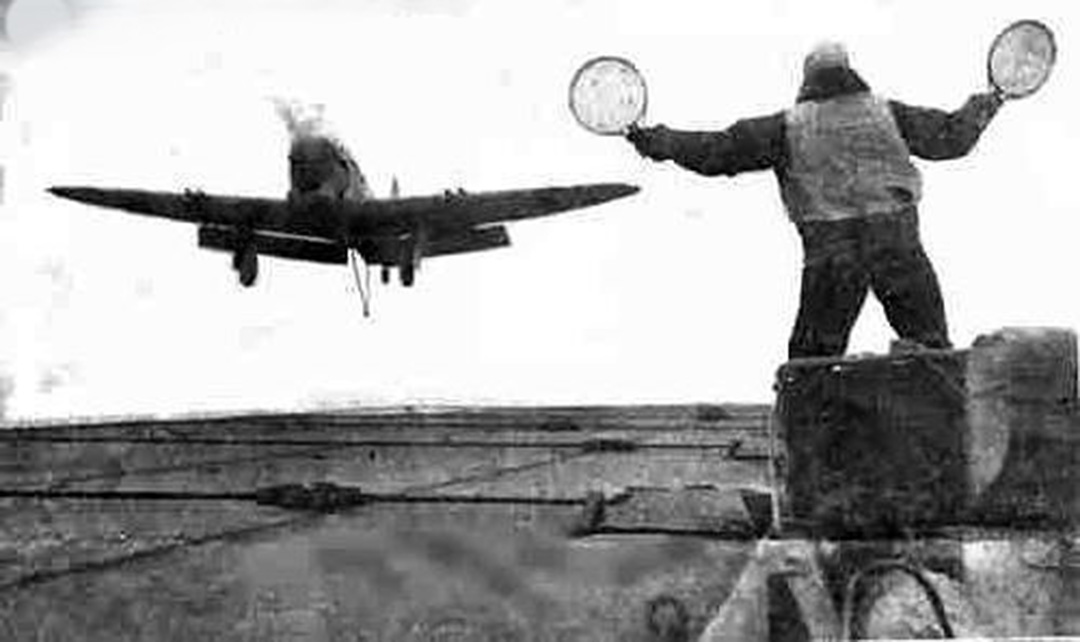
As the pilots approach the deck their planes’ noses are up and they cannot see their landing site. They are guided by the batsman who stands at the side of the runway holding two large coloured bats, in front of a coloured screen to make him stand out. The pilots watch every signal from the batsman who really flies the planes in.
The batsman on the Theseus, Lieut D G McQueen, would wave several planes away when their approach was not satisfactory. McQueen was a veteran, having waved in thousands of planes during the war in American carriers. On two occasions he had been forced to jump overboard in order to save himself from a crash-landing aircraft.
Arrester wires are raised along the deck to catch the hooks on the landing planes to bring them to a sudden halt, and barriers are raised on the deck to catch any plane that misses the wires. There is a “walkaway” at the side of the deck where crews jump for safety when planes are landing.
All the same time there are hundreds of men working below deck in a hangar 100 yards long. They perform all sorts of tasks, working around the clock to service the planes and keep them in flying shape.
Sunday 20th July 1947
It was time for the visiting fleet to continue their tour and head north to Sydney – but not before a parting display. The weather was calm and clear on the day and thousands of spectators lined the cliff tops of Frankston and Mornington.
At 1pm the planes for the afternoon demonstration were raised up by the lifts. At 2pm the planes roared off the deck one by one – 17 of them taking off efficiently within just a few minutes. As observers began to move downstairs from the control tower, one officer who was watching the planes said, “This looks bad.”
The Fireflies were about 1500 feet up and two miles ahead of the Theseus. They were manoeuvring to get into formation when, in a flash, two of them were suddenly locked together. The crewmen of the Theseus gasped as the two planes turned slowly and fell. They appeared to be one as they dropped into the water like a giant stone, disappearing in a column of white spray.
The crash siren immediately blared out and the destroyer Cockade about-turned and raced to the scene, guided by a plane which broke off from its formation to circle the crash site. A boat was lowered but only one body was recovered – that of 32 year old Lieut Commander Nat Hearle.
Naval officers on the carrier scoured the scene through their telescopes and binoculars and one even reported seeing two heads. Moments later, however, the report came in from the Cockade: “wreckage zero – no other signs.”
By the time the Theseus arrived, the only sign of the disaster was a patch of oil.
The demonstration continues
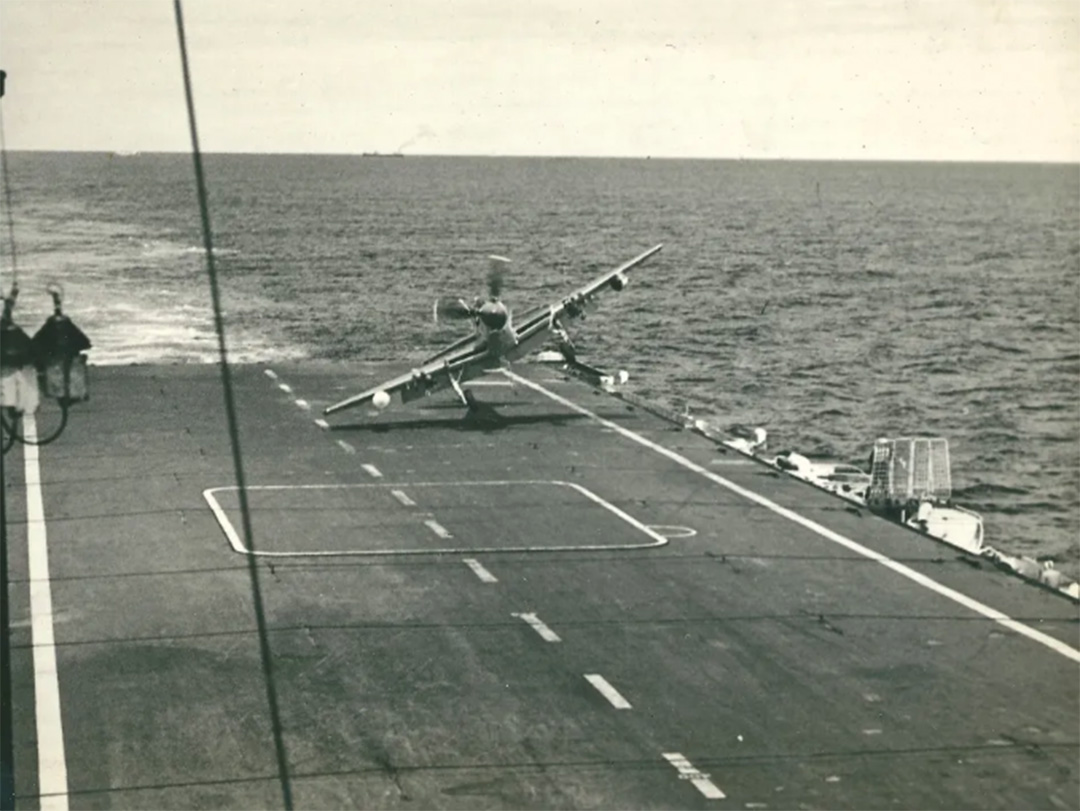
After half an hour of aerobatics, the Squadron leader came in and landed on the Theseus, followed by his number two. Number three came in quite erratically and far to the left, slewed around and crashed on the deck, skidding as though to go over the side. Batsman McQueen dived for his life into his safety net, quickly followed by two news camera operators.
The wooden sighting board behind him was shattered into splinters as the plane continued to career along out of control. The deck crew ducked for cover but the wing struck aircraft handler Tony Timmons in the head and killed him instantly. The pilot climbed out, badly shaken.
Two minutes later, the HMS Glory had its own emergency. The commanding officer of the 806 Squadron attempted to land his Seafire on the deck of the HMS Glory but floated over the catch wires and the barrier and crashed into aircraft parked on the deck. It struck 19yo Air Mechanic Terry Sadler who was working on an aircraft, and injured another.
Station Pier, the point of the morning’s departure, was crowded in the afternoon as the stretcher with Sadler was brought ashore and taken to Heidelberg hospital, where he was pronounced dead on arrival. He is buried in the naval cemetery at Cerberus.
Meanwhile, out on the bay, the 12 remaining planes from the Theseus were ordered to land at Point Cook and rejoin their ship the next day. Even then, one Firefly suffered a collapsed undercarriage and crashed on landing. Fortunately both occupants were not injured.
In summing up, the skipper of the Theseus, Capt K Dickson said, “It has indeed been a bad day. The chapter of incidents was very unusual.” True – it had been the Glory’s first flight deck mishap in 15 months, but his words would come back to haunt him.
Cause of the accidents
Experienced officers said that the stillness of Sunday’s weather was “worse than a thunderstorm” for deck landings. The absence of wind caused the planes to approach the decks at an abnormally fast speed which reduced the pilot’s control. Furthermore the carriers had turned into the sun to make the most of what little wind there was, and this had made landing even more difficult.
They were quick to scotch rumours of “too much hospitality” during their stay in Melbourne.
The collision of the two Fireflies was another matter. Some crew members noted, and questioned, the different launch sequence – for some unknown reason – which may have caused confusion in the air as the planes manoeuvred for position to get into formation.
The Royal Navy announced that an official inquiry would be held “in the squadron” (i.e. on board the carriers) and the results sent to the Admiralty in London. Otherwise, it would be business as usual. No further search was made for the three missing Firefly crew and, as soon as their repaired aircraft returned from Point Cook, they would depart for Sydney the next day.
The aftermath
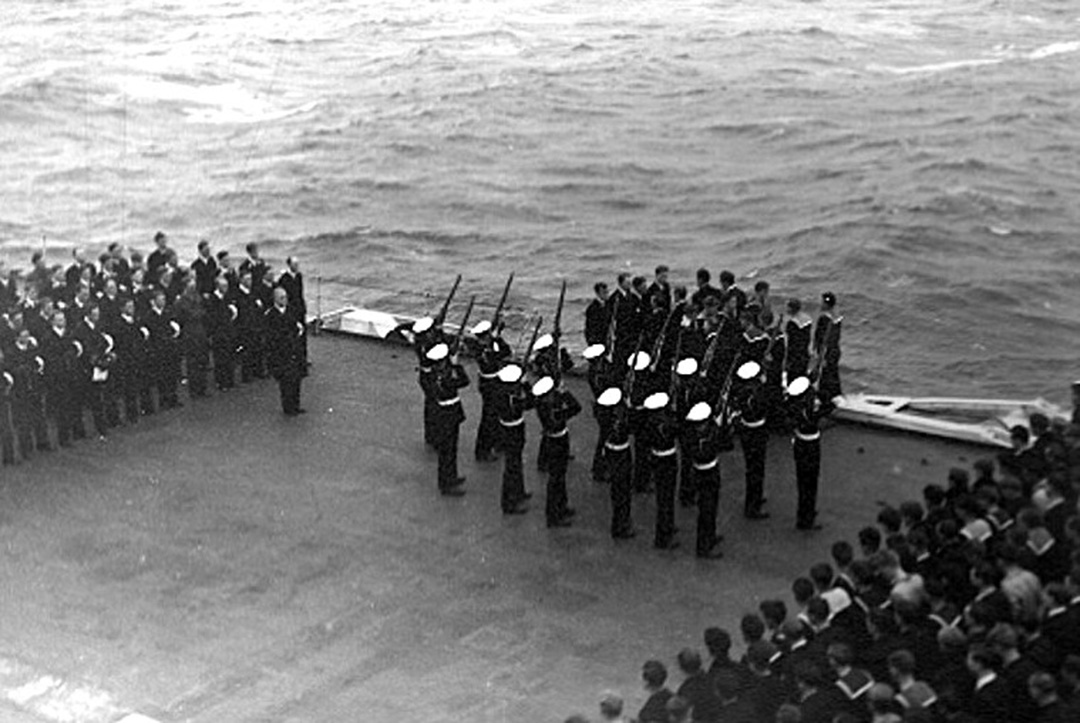
Once the fleet had cleared the Heads on Monday, there was a burial service at sea for the deceased pilot, Nat Hearle and deck crewman Tony Timmons. Officers and men formed up in two squares, leaving a passageway between the edge of the deck. The bodies, enclosed in canvas, were taken from the bomb hatch to the aircraft lift, which rose solemnly to the flight deck. Bearers with a marine escort took them to the deck edge and the marines fired three volleys.
Five days later, parts of an airplane wreckage were washed ashore at Mornington and identified by naval investigators as being from a Firefly from the Theseus. Salvage rights rested with the Australian Navy, but any search could only be at the request of the Royal Navy, which never happened.
The aircraft remained on the floor of the bay for over half a century until their discovery by the divers, Paul and Steve. Their inquiries led to Bill Grice in England, who had been a 20 year-old deck hand on the Theseus at the time and had since written of his experiences. When it was also found that Lieut Commander Hearle had relatives in Australia, the idea of a memorial service was born.
And so Bill Grice was invited to celebrate his 80th birthday alongside the Hearles and some new friends in a quiet, sacred spot on Port Phillip Bay.
Post script
Within a week, a ban was placed on all flying from Theseus and Glory until they reached New Zealand where intensive training could be carried out. This followed a death in Brisbane which made a total of seven casualties and 11 planes lost or badly damaged during the goodwill tour.
Finally, a lack of flying practice was admitted as the problem. “For the past six months, average flying time was only about 10 hours per month. You just can’t mix carrier flying and play.”
Peninsula Essence February 2026